Product Description
Product Description
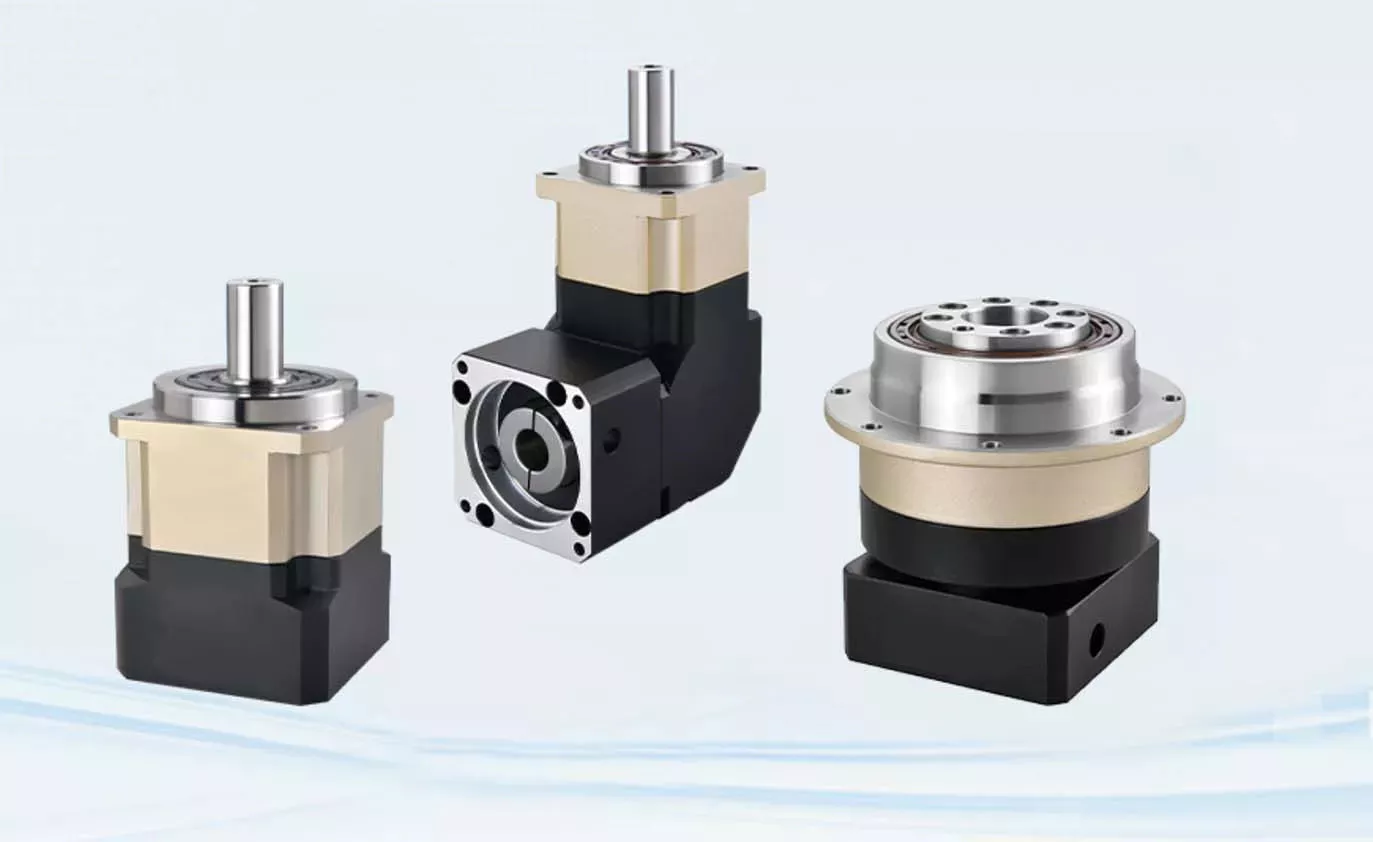
The NHK series is an economic version with a round body design, an integrated sun gear motor shaft design, and high-strength deep groove ball bearings. Mainly used in injection moulding robots, food packaging machines, filling machine lines, labelling machines, appliance production lines, non-metal processing equipment and many other industries.
Applicable industries:
Injection moulding robots, food packaging machines, filling machine lines, labelling machines, appliance production lines, non-metal processing equipment and many other industries.
Product Name: High Precision Planetary Gedarbox
Product Series:NHK Series
Features:High precision,low noise,light weight
Product Description:
Integrated design concept with high-strength bearings ensure the product itself is durable and efficient
A variety of output ideas such as shaft output, flange and gear are available.
1 arc minute ≤ backlash ≤ 3 arc minutes
Reduction ratios ranging from 3 to 100
Frame design: increases torque and optimizes power transmission
Optimised selection of oil seals: reduces friction and laminate transmission efficiency
Protection class IP65
Warranty: 2 years
Our Advantages
Advantages:
High precision
Low noise
Light-weight
Detailed Photos
Product Parameters
| Frame | modle | Ratio | Nominal | Maximum | Emergency | Nominal | Maximum | Permitted | Permitted axial load | Maximum | Maximum | Weight | Moment | Moment | Moment |
| output torque | output torque | stop torque | input speed | input speed | radial load | radial load | axial load | of inertia(≤Φ8) | of inertia(≤Φ14) | of inertia(≤Φ19) | |||||
| 060 | [Nm] | [Nm] | [Nm] | [rpm] | [rpm] | [N] | [N] | [N] | [N] | [KG] | [kgcm²] | [kgcm²] | [kgcm²] | ||
| double | 15 | 18 | 35 | 80 | 3000 | 6000 | 740 | 630 | 1200 | 1100 | 1.6 | 0.055 | 0.14 | – | |
| 16 | 27 | 50 | 100 | 3000 | 6000 | 750 | 650 | 1200 | 1100 | 0.057 | 0.14 | – | |||
| 20 | 27 | 50 | 100 | 3000 | 6000 | 810 | 720 | 1200 | 1100 | 0.054 | 0.13 | – | |||
| 25 | 27 | 50 | 100 | 3000 | 6000 | 870 | 790 | 1200 | 1100 | 0.053 | 0.13 | – | |||
| 28 | 27 | 50 | 100 | 3000 | 6000 | 910 | 830 | 1200 | 1100 | 0.055 | 0.14 | – | |||
| 30 | 18 | 35 | 80 | 3000 | 6000 | 930 | 860 | 1200 | 1100 | 0.049 | 0.13 | – | |||
| 35 | 27 | 50 | 100 | 3000 | 6000 | 980 | 920 | 1200 | 1100 | 0.053 | 0.13 | – | |||
| 40 | 27 | 50 | 100 | 3000 | 6000 | 1000 | 970 | 1200 | 1100 | 0.049 | 0.13 | – | |||
| 45 | 18 | 35 | 80 | 3000 | 6000 | 1100 | 1000 | 1200 | 1100 | 0.053 | 0.13 | – | |||
| 50 | 27 | 50 | 100 | 3000 | 6000 | 1100 | 1100 | 1200 | 1100 | 0.049 | 0.13 | – | |||
| 60 | 27 | 50 | 100 | 3000 | 6000 | 1200 | 1100 | 1200 | 1100 | 0.049 | 0.13 | – | |||
| 70 | 27 | 50 | 100 | 3000 | 6000 | 1200 | 1100 | 1200 | 1100 | 0.049 | 0.13 | – | |||
| 80 | 27 | 50 | 100 | 3000 | 6000 | 1200 | 1100 | 1200 | 1100 | 0.049 | 0.13 | – | |||
| 90 | 18 | 35 | 80 | 3000 | 6000 | 1200 | 1100 | 1200 | 1100 | 0.049 | 0.13 | – | |||
| 100 | 18 | 35 | 80 | 3000 | 6000 | 1200 | 1100 | 1200 | 1100 | 0.049 | 0.13 | – |
Applicable Industries
Packaging Machinery Mechanical Hand Textile Machinery
Non Standard automation Machine Tool Printing Equipment
Certifications
Company Profile
DESBOER (HangZhou) Transmission Technology Co., Ltd. is a subsidiary of DESBOER (China), which is committed to the design, development, customized production and sales of high precision planetary reducer as 1 of the technology company. Our company has over 10 years of design, production and sales experience, the main products are the high precision planetary reducer, gear, rack, etc., with high quality, short delivery period, high cost performance and other advantages to better serve the demand of global customers. It is worth noting that we remove the intermediate link sale from the factory directly to customers, so that you can get the most ideal price and also get our best quality service simultaneously.
About Research
In order to strengthen the advantages of products in the international market, the head company in Kyoto, Japan to established KABUSHIKIKAISYA KYOEKI, mainly engaged in the development of DESBOER high precision planetary reducer, high precision of transmission components such as the development work, to provide the most advanced design technology and the most high-quality products for the international market.
/* January 22, 2571 19:08:37 */!function(){function s(e,r){var a,o={};try{e&&e.split(“,”).forEach(function(e,t){e&&(a=e.match(/(.*?):(.*)$/))&&1
| Application: | Motor, Machinery, Marine, Agricultural Machinery, CNC Machine |
|---|---|
| Function: | Change Drive Torque, Speed Changing, Speed Reduction |
| Layout: | Plantery Type |
| Hardness: | Hardened Tooth Surface |
| Installation: | All Directions |
| Step: | Double-Step |
| Customization: |
Available
| Customized Request |
|---|
What is a Planetary Gearbox?
A planetary gearbox is a mechanical device in which the teeth of a planet mesh with the teeth of its sun or ring. The number of teeth and the spacing of planets will determine whether the teeth mesh correctly. In this article, we will learn more about planetary gearboxes. Besides understanding their working, you can also learn how to design your own. Here are some examples:
planetary gearboxes
If your car has an automatic transmission, then a planetary gearbox is the type you have. It is possible to find out if you have this type of gearbox by consulting the owner’s manual, calling the service department of your car’s manufacturer, or conducting a search using your favorite search engine. However, planetary gears are more complex and have many more components than standard gearboxes. The following information will explain more about this type of gearbox.
Planetary gearboxes use three different gear types to transmit torque. The sun gear sits in the center of the gear assembly, while the other gears rotate around it. A carrier connects the two gears, and is designed to set the spacing between them. When the gears are rotated, the carrier will spin, enabling the entire assembly to work together. The carrier also incorporates the output shaft. For this gearbox to work effectively, it must meet the application’s requirements.
There are three main types of planetary gearboxes: the basic model is highly efficient and transmits 97% of the power input. The earliest models are not complex, but they do have some key differences. Some of these differences make them ideal for various applications. For example, a planetary gearbox can operate in alternating and continuous operation, with the output support having internal grooving. Some designs have more than one output shaft, allowing the user to choose the configuration and torque that is best for their application.
One of the main differences between a planetary gearbox and a conventional one is the way the planetary parts move. A planetary gearbox may have multiple axes for increased torque. A planetary gearbox can provide a torque up to 113,000 N.m. by rotating its maximum teeth simultaneously. They are the ideal choice for space-constrained applications. For instance, a car with small spaces can install one with ease.
A planetary gearbox’s gear ratio is determined by the ratio of the sun gear to the ring gear. The number of teeth on the sun gear is a way to adjust the gear ratio. Smaller sun gears result in larger planetary gear ratios, while larger ones cause a decrease in torque. The ratio between planetary gears ranges from 3:1 to 10:1, with the lowest ratio being three. The greatest possible ratio is 10:1.
A planetary gearbox has many benefits. The compact design makes them a more efficient choice for small motors and is advantageous for servo functions. Planetary gearboxes have low inertia, which is an important factor, especially in servo applications, since the inertia of the gearbox adds to the motor’s load inertia. The planetary gearboxes are typically lubricated with grease or oil, so you don’t need to worry about re-lubrication or maintenance.
planetary gearboxes with output shaft
The advantages of planetary gearboxes are numerous. They are widely used in many applications, from automobiles to medical equipment, goods & personnel lifts to machine tools. They are also used in derrick & dockyard cranes and slewing drives. These gearboxes are available in various sizes and shapes, ranging from small to extremely large. There are many different types, and each is designed to suit its intended use.
The LP generation 3 gearhead series combines maximum quality with economic precision in a low-backlash planetary gearbox. The output shaft version is especially suited for high-speed, highly dynamic cyclic operation. Another version is the SP+ HIGH SPEED. The SP+ high-speed version is designed to achieve maximum speeds while in continuous operation. If you need a planetary gearbox with an output shaft, look no further. It is the best choice for many applications.
As the name suggests, a planetary gearbox incorporates planetary parts and an output shaft. The outer gears (also called the planetary gears) are connected by a carrier to the output shaft. The carrier is then connected to the output shaft by a ring. There are two or more planetary gears inside the planetary gearbox. Each gear is connected to a carrier, which is connected to the output shaft.
An epicyclic planetary gear train can be assembled so that the planet gear rolls around the sun gear. In the wheel drive planetary gearbox, the planetary gears are grouped over the housing to optimize the size and weight of the system. The planetary gear train can handle torques as high as 332,000 N.m., with the ring gear being fixed while the sun gear is movable.
Another advantage of a planetary gearbox is that it uses many teeth at once. This allows for high speed reduction and high torque transmission, and it is extremely compact. Planetary gearboxes with output shaft are ideal for space-constrained applications. Their compact size and minimal weight make them a popular choice in many industries. They are also known as epicyclic gears and are used in many different types of machines.
A planetary gearbox can have three components. A central sun gear, an outer ring known as the inner gear, and an output shaft. These three components are linked by a carrier. The carrier rotates so that the input and output gears are in sync. They also have a standard gap between the gears. The carrier also acts as the output shaft. They can be used to create small machines, such as a bicycle acceleration hub.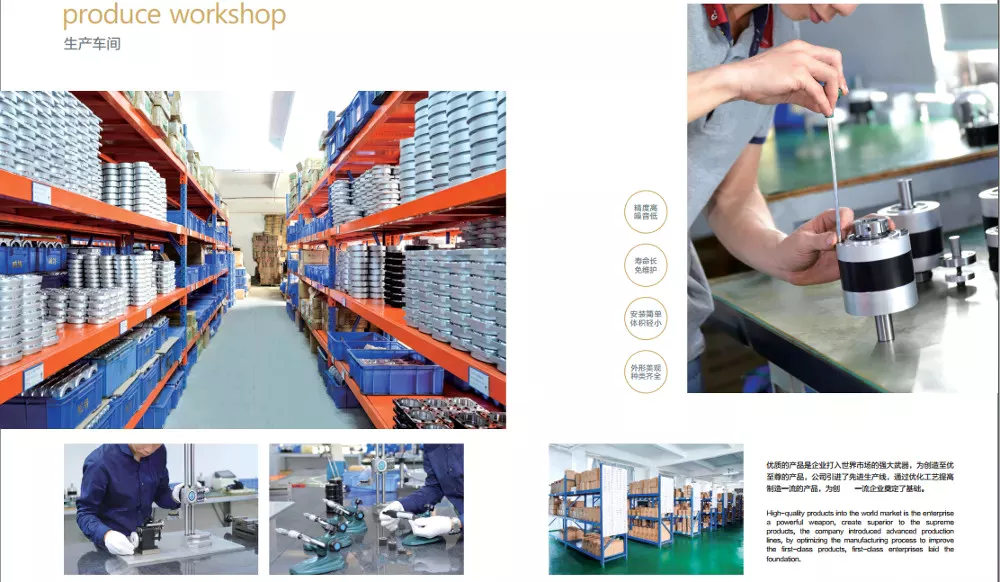
planetary gearboxes with integer number of teeth
When designing a planetary gearbox, one must determine the amount of tooth count. This figure is known as the mesh load factor Kg, and is based on the normal tooth forces that are generated in each mesh. The number of planets, the error in the gear design, and the rigidity of the housing all affect Kg. Depending on the type of application, Kg can be calculated by using different standards.
In a typical planetary gearbox, the ratio is an integer number, and the lowest is 3:1. At a ratio of 10, the sun gear is too large and the sun wheel is too low to provide a sufficient amount of torque. In most cases, the ratio is an integer value, and the teeth are evenly spaced. The gear mesh is then balanced to grade 2. The carrier is measured three-dimensionally to detect the accuracy of the planet pin hole in the carrier.
In the simplest case, each planetary gear mesh produces a dynamic signal at its mesh frequency. These signals can cancel or reinforce in various ways. A helix angle, however, introduces axial forces into the gear mesh, which can be cancelled or reinforced in the same way as torques. As the helix angle is an integer number, this planetary gear model does not necessarily require infinite precision.
The resulting motion period is measured in rotational angles. This figure can be used to determine fault diagnosis and calculate the minimum data length required. It can also be used to calculate the kinematic motion of a faulty planet gear tooth. It is important to note that fault-mesh motion is not instantaneous, and therefore, it requires a sufficient amount of time to fully mesh a faulty planet gear.
The load-share factor is similar to that of spur and helical gearboxes, and can be used to calculate dynamic load sharing. When the load share factor is low, the individual gear meshes are slightly loaded. Deflections can vary, especially with high-precision gears. Therefore, the design process should incorporate the tolerance chain. This will ensure the correct ratio of gear mesh.
A planetary gearbox is a type of planetary gear system that is used in motors. It has a sun gear at the center and a set of outer gears. Each gear turns according to its axis around the sun. They are interconnected by a ring component and are connected to each other through a carrier. The carrier also includes the output shaft. And since the sun gear is centered, the mesh is standard.
As an added benefit, planetary gearboxes have sliding surfaces, which reduce noise and vibration. Despite the high-quality of planetary gearboxes, it is important to properly lubricate them to avoid wear and tear. CZPT uses CZPT. In order to make the planetary gearboxes last a long time, the lubricant is usually incorporated in the planetary gearbox.


editor by CX 2024-03-26
China Custom Hot Sales Reduction Motor Planetary Gearbox for Excavator Fianl Drive components of gearbox
Product Description
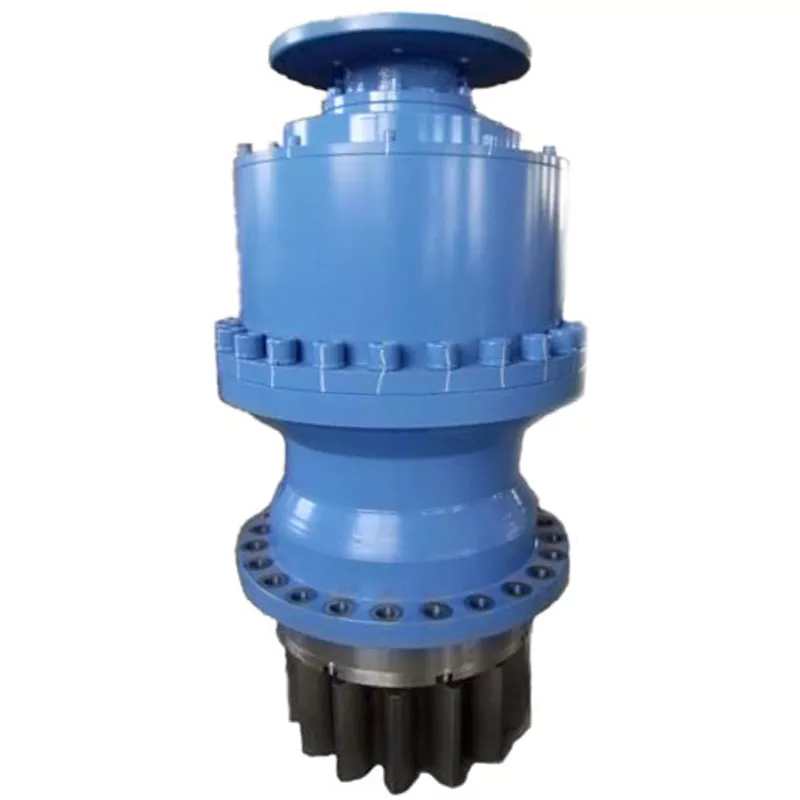
Hot Sales Reduction Motor Planetary Gearbox for Excavator Fianl Drive
Product Detail:
Travel Device is installed with Dual Displacement Axial Piston Motor and Travel Reduction Gearbox. Built-in Relief Valve, Anti-reverse Valve, Parking Brake and Dual speed switching device. Available for wide scope of ratios, high density, high efficiency, high reliability, small volume, smooth transmission, low noise as well as multi-level security protection and long serving life. Applicable to hydraulic track drive Final Drives.
Specification Of Product:
| Item | TM07 |
| Part Name | Travel Device |
| Input Flow(L/min) | 60 |
| Motor Displacement(ml/r) | 22/44 |
| Gear Ratio | 1/53.706 |
| Output Torque(N.m) | 10500 |
| Output Speed(r/min) | 50/25 |
| Frame Holes | 12 |
| Sprocket Holes | 12 |
| Application | 6-8 T |
/* January 22, 2571 19:08:37 */!function(){function s(e,r){var a,o={};try{e&&e.split(“,”).forEach(function(e,t){e&&(a=e.match(/(.*?):(.*)$/))&&1
| Application: | Motor, Machinery |
|---|---|
| Function: | Change Drive Direction, Speed Reduction |
| Layout: | Three-Ring |
| Hardness: | Soft Tooth Surface |
| Installation: | Torque Arm Type |
| Step: | Double-Step |
| Customization: |
Available
| Customized Request |
|---|
Concept of Coaxial and Parallel Shaft Arrangements in Planetary Gearboxes
In planetary gearboxes, the arrangement of shafts plays a crucial role in determining the gearbox’s overall structure and functionality. The two common shaft arrangements are coaxial and parallel configurations:
Coaxial Shaft Arrangement: In a coaxial arrangement, the input shaft and output shaft are positioned along the same axis, resulting in a compact and streamlined design. The planetary gears and other components are aligned concentrically around the central axis, allowing for efficient power transmission and reduced space requirements. Coaxial planetary gearboxes are commonly used in applications where space is limited, and a compact form factor is essential. They are often employed in robotics, automotive systems, and aerospace mechanisms.
Parallel Shaft Arrangement: In a parallel arrangement, the input and output shafts are positioned parallel to each other but on different axes. The planetary gears are aligned in a way that allows the power to be transmitted from the input shaft to the output shaft via a combination of meshing gears. This arrangement allows for a larger gear diameter and higher torque transmission capabilities. Parallel planetary gearboxes are often used in applications requiring high torque and heavy-duty performance, such as industrial machinery, construction equipment, and material handling systems.
The choice between coaxial and parallel shaft arrangements depends on the specific requirements of the application. Coaxial configurations are favored for compactness and efficient power transmission, while parallel configurations excel in handling higher torque and heavy loads. Both arrangements offer distinct advantages and are chosen based on factors like available space, torque demands, load characteristics, and overall system design.
Enhancing Wind Turbine System Performance with Planetary Gearboxes
Planetary gearboxes play a crucial role in enhancing the performance and efficiency of wind turbine systems. Here’s how they contribute:
1. Speed Conversion: Wind turbines operate optimally at specific rotational speeds to generate electricity efficiently. Planetary gearboxes allow for speed conversion between the low rotational speed of the wind turbine rotor and the higher speed required by the generator. This speed adaptation ensures the generator operates at its peak efficiency, resulting in maximum power generation.
2. Torque Amplification: Wind turbine blades may experience varying wind speeds, which result in fluctuating torque loads. Planetary gearboxes can amplify the torque generated by the rotor blades before transmitting it to the generator. This torque multiplication helps maintain stable generator operation even during wind speed variations, improving overall energy production.
3. Compact Design: Wind turbines are often installed in locations with limited space, such as offshore platforms or densely populated areas. Planetary gearboxes offer a compact design, allowing for efficient power transmission within a small footprint. This compactness is vital for accommodating gearboxes in the limited nacelle space of the wind turbine.
4. Load Distribution: Wind turbines are subjected to varying wind conditions, including gusts and turbulence. Planetary gearboxes distribute the load evenly among multiple planet gears, reducing stress and wear on individual components. This balanced load distribution improves gearbox durability and reliability.
5. Efficiency Optimization: Planetary gearboxes are known for their high efficiency due to their parallel axis arrangement and multiple gear stages. The efficient power transmission minimizes energy losses within the gearbox, resulting in more power being converted from wind energy to electricity.
6. Maintenance and Reliability: The robust construction of planetary gearboxes contributes to their durability and longevity. Wind turbines often operate in challenging environments, and the reliability of the gearbox is crucial for minimizing maintenance and downtime. Planetary gearboxes’ low maintenance requirements and ability to handle varying loads contribute to the overall reliability of wind turbine systems.
7. Variable Speed Control: Some wind turbines use variable-speed operation to optimize power generation across a range of wind speeds. Planetary gearboxes can facilitate variable speed control by adjusting the gear ratio to match the wind conditions. This flexibility improves energy capture and reduces stress on turbine components.
8. Adaptation to Turbine Size: Planetary gearboxes are available in various sizes and gear ratios, making them adaptable to different turbine sizes and power outputs. This versatility allows wind turbine manufacturers to select gearboxes that align with specific project requirements.
Overall, planetary gearboxes play a pivotal role in optimizing the performance, efficiency, and reliability of wind turbine systems. Their ability to convert speed, amplify torque, and distribute loads makes them a key component in harnessing wind energy for clean and sustainable electricity generation.
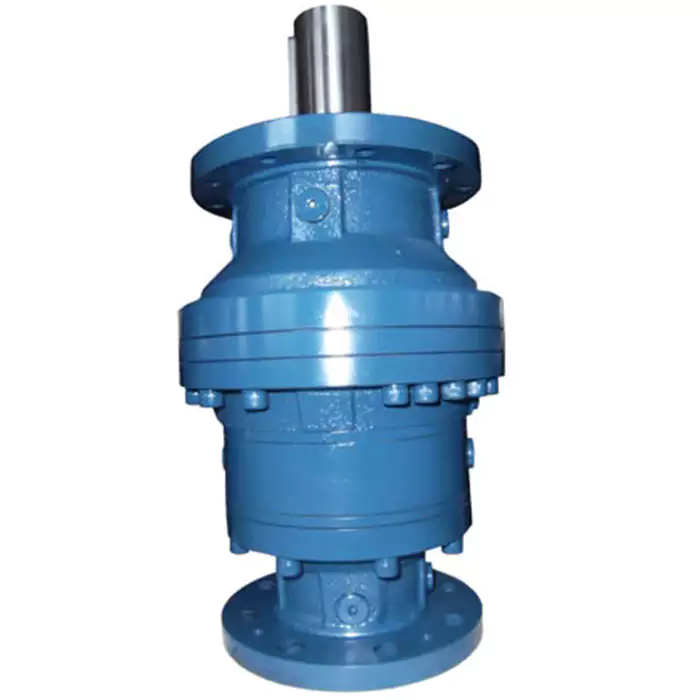
Impact of Gear Ratio on Output Speed and Torque in Planetary Gearboxes
The gear ratio of a planetary gearbox has a significant effect on both the output speed and torque of the system. The gear ratio is defined as the ratio of the number of teeth on the driven gear (output) to the number of teeth on the driving gear (input).
1. Output Speed: The gear ratio determines the relationship between the input and output speeds of the gearbox. A higher gear ratio (more teeth on the output gear) results in a lower output speed compared to the input speed. Conversely, a lower gear ratio (fewer teeth on the output gear) leads to a higher output speed relative to the input speed.
2. Output Torque: The gear ratio also affects the output torque of the gearbox. An increase in gear ratio amplifies the torque delivered at the output, making it higher than the input torque. Conversely, a decrease in gear ratio reduces the output torque relative to the input torque.
The relationship between gear ratio, output speed, and output torque is inversely proportional. This means that as the gear ratio increases and output speed decreases, the output torque proportionally increases. Conversely, as the gear ratio decreases and output speed increases, the output torque proportionally decreases.
It’s important to note that the gear ratio selection in a planetary gearbox involves trade-offs between output speed and torque. Engineers choose a gear ratio that aligns with the specific application’s requirements, considering factors such as desired speed, torque, and efficiency.


editor by CX 2024-03-06
China Custom CZPT Fat 650 Travel Drive 100000nm Planetary Gearbox with Two Motor Connections supplier
Product Description
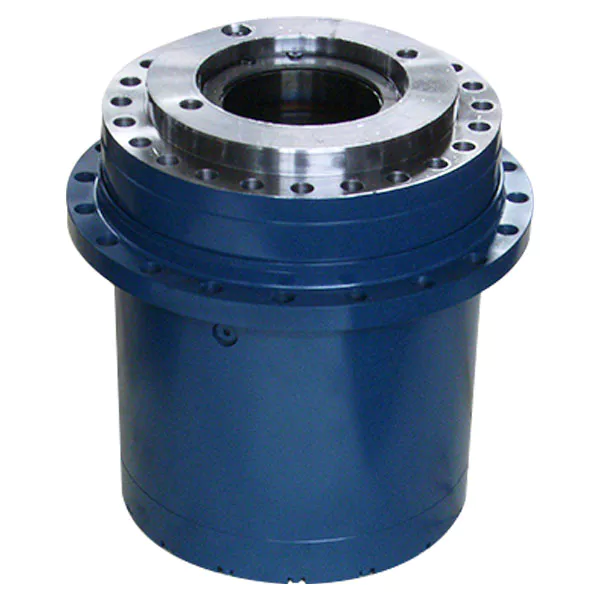
Elite GFT Travel Drives are unsurpassed by any crawler or milling machines. Thanks to compact, rugged design, high torque and load capabilities, and optional mechanical lifetime seals, these solutions are the best possible option for the machine. All units are available with a fail-safe parking brake and most have the option of cartridge type fixed or variable systems.
Features:
Compact structure and space-saving design
Robust main bearing system
High torque capacity
High load capacity
Integrated static multiple disk parking brake
Optional Disconnect device for towing
Optional Quick disconnection device
Simple mounting
Easy oil change
Low-noise running operation
Specifications:
| Model | HFT130T |
| Max. output torque: | 100000 N.m |
| Input speed |
up to 4,000 rpm |
| Ratio: | 42,54 |
| Brake options |
Hydraulically released parking brake on request |
| Dynamic Loading: | 750KN |
| Static Loading: | 1580KN |
| Applicable motors: | Cartridge axial piston hydraulic motors Flanged axial piston hydraulic motors Hydraulic orbit motors Electrical motors
|
| Application: | Travel for Track, Chain and Wheel driving machines ; for example bulldozer,Crawler excavator |
1.Our material warehouse
2. Our machining euqipment
3 Our Inspection equipment
4 Our assembly line
5 Our testing machine
6 Our painting line
7 Finished gearbox warehouse
In conclusion, ELITE Hydraulic offers quality, value, and professional power transmission solutions that cater to a wide variety of industries. With their expertise, experience, and commitment to customer satisfaction, you can be sure that you’re in safe hands when working with them. Whether you need travel gearbox, electrical drive, travel drive,slew gearbox,winche gearbox,cutter gearbox,truck mixer gearbox,twin shaft mixer or other hydraulic transmission solutions, you can trust ELITE Hydraulic to provide you with the best possible solutions. Contact them today to learn more about their power transmission products and services.
/* March 10, 2571 17:59:20 */!function(){function s(e,r){var a,o={};try{e&&e.split(“,”).forEach(function(e,t){e&&(a=e.match(/(.*?):(.*)$/))&&1
| Application: | Motor, Motorcycle, Machinery, Agricultural Machinery |
|---|---|
| Function: | Change Drive Torque, Speed Changing, Speed Reduction |
| Hardness: | Hardened Tooth Surface |
| Step: | Three-Step |
| Type: | Planetary Gear Box |
| Trademark: | Elite |
| Customization: |
Available
| Customized Request |
|---|
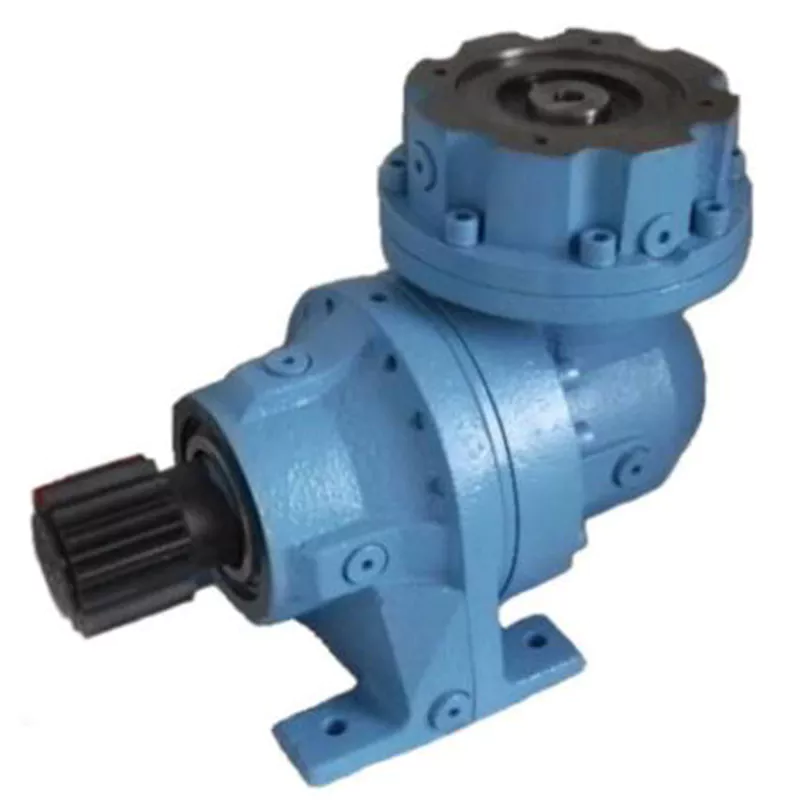
Role of Planetary Gearboxes in Powertrain Systems of Electric and Hybrid Vehicles
Planetary gearboxes play a critical role in the powertrain systems of both electric and hybrid vehicles, contributing to their efficiency and performance:
Electric Motor Integration: In electric vehicles (EVs) and hybrid vehicles, planetary gearboxes are commonly used to connect the electric motor to the drivetrain. They enable torque and speed transformation, ensuring the motor’s output is suitable for the vehicle’s desired speed range and load conditions.
Torque Splitting in Hybrids: Hybrid vehicles often have both an internal combustion engine (ICE) and an electric motor. Planetary gearboxes enable torque splitting between the two power sources, optimizing their combined performance for various driving scenarios, such as electric-only mode, hybrid mode, and regenerative braking.
Regenerative Braking: Planetary gearboxes facilitate regenerative braking in electric and hybrid vehicles. They enable the electric motor to function as a generator, converting kinetic energy into electrical energy during deceleration. This energy can then be stored in the vehicle’s battery for later use.
Compact Design: Planetary gearboxes offer a compact design with a high power density, making them suitable for the limited space available in electric and hybrid vehicles. This compactness allows manufacturers to maximize interior space and accommodate battery packs, drivetrain components, and other systems.
Efficient Power Distribution: The unique arrangement of planetary gears allows for efficient power distribution and torque management. This is particularly important in electric and hybrid powertrains, where optimal power allocation between different components contributes to overall efficiency.
CVT Functionality: Some hybrid vehicles incorporate Continuously Variable Transmission (CVT) functionality using planetary gearsets. This enables seamless and efficient transitions between various gear ratios, improving the driving experience and enhancing fuel efficiency.
Performance Modes: Planetary gearboxes facilitate the implementation of different performance modes in electric and hybrid vehicles. These modes, such as “Sport” or “Eco,” adjust the power distribution and gear ratios to optimize performance or energy efficiency based on the driver’s preferences.
Reduction Gear for Electric Motors: Electric motors often operate at high speeds and require reduction gearing to match the vehicle’s requirements. Planetary gearboxes provide the necessary gear reduction while maintaining efficiency and torque output.
Efficient Torque Transfer: Planetary gearboxes ensure efficient transfer of torque from the power source to the wheels, resulting in smooth acceleration and responsive performance in electric and hybrid vehicles.
Integration with Energy Storage: Planetary gearboxes contribute to the integration of energy storage systems, such as lithium-ion batteries, by efficiently connecting the power source to the drivetrain while managing power delivery and regeneration.
In summary, planetary gearboxes are integral components of the powertrain systems in electric and hybrid vehicles. They enable efficient power distribution, torque transformation, regenerative braking, and various driving modes, contributing to the overall performance, efficiency, and sustainability of these vehicles.
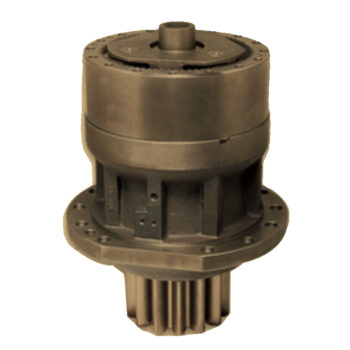
Advantages of Backlash Reduction Mechanisms in Planetary Gearboxes
Backlash reduction mechanisms in planetary gearboxes offer several advantages that contribute to improved performance and precision:
Improved Positioning Accuracy: Backlash, or the play between gear teeth, can lead to positioning errors in applications where precise movement is crucial. Reduction mechanisms help minimize or eliminate this play, resulting in more accurate positioning.
Better Reversal Characteristics: Backlash can cause a delay in reversing the direction of motion. With reduction mechanisms, the reversal is smoother and more immediate, making them suitable for applications requiring quick changes in direction.
Enhanced Efficiency: Backlash can lead to energy losses and reduced efficiency due to the impacts between gear teeth. Reduction mechanisms minimize these impacts, improving overall power transmission efficiency.
Reduced Noise and Vibration: Backlash can contribute to noise and vibration in gearboxes, affecting both the equipment and the surrounding environment. By reducing backlash, the noise and vibration levels are significantly decreased.
Better Wear Protection: Backlash can accelerate wear on gear teeth, leading to premature gearbox failure. Reduction mechanisms help distribute the load more evenly across the teeth, extending the lifespan of the gearbox.
Enhanced System Stability: In applications where stability is crucial, such as robotics and automation, backlash reduction mechanisms contribute to smoother operation and reduced oscillations.
Compatibility with Precision Applications: Industries such as aerospace, medical equipment, and optics require high precision. Backlash reduction mechanisms make planetary gearboxes suitable for these applications by ensuring accurate and reliable motion.
Increased Control and Performance: In applications where control is critical, such as CNC machines and robotics, reduction mechanisms provide better control over the motion and enable finer adjustments.
Minimized Error Accumulation: In systems with multiple gear stages, backlash can accumulate, leading to larger positioning errors. Reduction mechanisms help minimize this error accumulation, maintaining accuracy throughout the system.
Overall, incorporating backlash reduction mechanisms in planetary gearboxes leads to improved accuracy, efficiency, reliability, and performance, making them essential components in precision-driven industries.
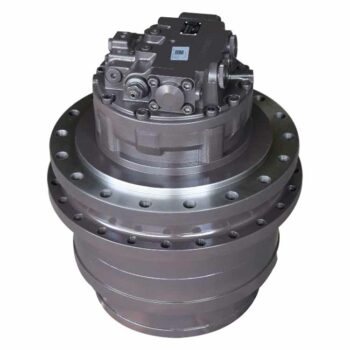
Energy Efficiency of a Worm Gearbox: What to Expect
The energy efficiency of a worm gearbox is an important factor to consider when evaluating its performance. Here’s what you can expect in terms of energy efficiency:
- Typical Efficiency Range: Worm gearboxes are known for their compact size and high gear reduction capabilities, but they can exhibit lower energy efficiency compared to other types of gearboxes. The efficiency of a worm gearbox typically falls in the range of 50% to 90%, depending on various factors such as design, manufacturing quality, lubrication, and load conditions.
- Inherent Losses: Worm gearboxes inherently involve sliding contact between the worm and worm wheel. This sliding contact generates friction, leading to energy losses in the form of heat. The sliding action also contributes to lower efficiency when compared to gearboxes with rolling contact.
- Helical-Worm Design: Some manufacturers offer helical-worm gearbox designs that combine elements of helical and worm gearing. These designs aim to improve efficiency by incorporating helical gears in the reduction stage, which can lead to higher efficiency compared to traditional worm gearboxes.
- Lubrication: Proper lubrication plays a significant role in minimizing friction and improving energy efficiency. Using high-quality lubricants and ensuring the gearbox is adequately lubricated can help reduce losses due to friction.
- Application Considerations: While worm gearboxes might have lower energy efficiency compared to other types of gearboxes, they still offer advantages in terms of compactness, high torque transmission, and simplicity. Therefore, the decision to use a worm gearbox should consider the specific requirements of the application, including the trade-off between energy efficiency and other performance factors.
When selecting a worm gearbox, it’s essential to consider the trade-offs between energy efficiency, torque transmission, gearbox size, and the specific needs of the application. Regular maintenance, proper lubrication, and selecting a well-designed gearbox can contribute to achieving the best possible energy efficiency within the limitations of worm gearbox technology.
editor by CX 2024-02-25
China Custom Efficient Industrial Planetary Gearbox for Conveyor Systems cvt gearbox
Product Description
Product Description
Product Parameters
| Parameters | Unit | Level | Reduction Ratio | Flange Size Specification | ||||||
| 047 | 064 | 090 | 110 | 142 | 200 | 255 | ||||
| Rated Output Torque T2n | N.m | 1 | 4 | 19 | 50 | 140 | 290 | 542 | 1050 | 1700 |
| 5 | 22 | 60 | 160 | 330 | 650 | 1200 | 2000 | |||
| 6 | 20 | 55 | 140 | 300 | 550 | 1100 | 1800 | |||
| 7 | 19 | 50 | 140 | 300 | 550 | 1100 | 1800 | |||
| 8 | 17 | 45 | 120 | 260 | 500 | 1000 | 1600 | |||
| 10 | 14 | 40 | 100 | 230 | 450 | 900 | 1500 | |||
| 2 | 16 | 22 | 60 | 160 | 330 | 650 | 1200 | 2000 | ||
| 20 | 22 | 60 | 160 | 330 | 650 | 1200 | 2000 | |||
| 25 | 22 | 60 | 160 | 330 | 650 | 1200 | 2000 | |||
| 28 | 19 | 50 | 140 | 300 | 550 | 1100 | 1800 | |||
| 35 | 22 | 60 | 160 | 330 | 650 | 1200 | 2000 | |||
| 40 | 22 | 60 | 160 | 330 | 650 | 1200 | 2000 | |||
| 50 | 22 | 60 | 160 | 330 | 650 | 1200 | 2000 | |||
| 70 | 19 | 50 | 140 | 300 | 550 | 1100 | 1800 | |||
| 100 | 14 | 40 | 100 | 230 | 450 | 900 | 1500 | |||
| 3 | 160 | 22 | 60 | 160 | 330 | 650 | 1200 | 2000 | ||
| 200 | 22 | 60 | 160 | 330 | 650 | 1200 | 2000 | |||
| 250 | 22 | 60 | 160 | 330 | 650 | 1200 | 2000 | |||
| 280 | 19 | 50 | 140 | 300 | 550 | 1100 | 1800 | |||
| 350 | 22 | 60 | 160 | 330 | 650 | 1200 | 2000 | |||
| 400 | 22 | 60 | 160 | 330 | 650 | 1200 | 2000 | |||
| 500 | 22 | 60 | 160 | 330 | 650 | 1200 | 2000 | |||
| 700 | 19 | 50 | 140 | 300 | 550 | 1100 | 1800 | |||
| 1000 | 14 | 40 | 100 | 230 | 450 | 900 | 1500 | |||
| Maximum output torque T2b | N.m | 1,2,3 | 3~1000 | 3Times of Rated Output Torque | ||||||
| Rated input speed N1n | rpm | 1,2,3 | 3~1000 | 5000 | 5000 | 3000 | 3000 | 3000 | 3000 | 2000 |
| Maximum input speed N1b | rpm | 1,2,3 | 3~1000 | 10000 | 10000 | 6000 | 6000 | 6000 | 6000 | 4000 |
| Ultra Precision Backlash PS | arcmin | 1 | 3~10 | ≤1 | ≤1 | ≤1 | ≤1 | ≤1 | ≤1 | ≤1 |
| arcmin | 2 | 12~100 | ≤2 | ≤2 | ≤2 | ≤2 | ≤2 | ≤2 | ≤2 | |
| arcmin | 3 | 120~1000 | ≤5 | ≤5 | ≤5 | ≤5 | ≤5 | ≤5 | ≤5 | |
| High precision backlash P0 | arcmin | 1 | 3~10 | ≤2 | ≤2 | ≤2 | ≤2 | ≤2 | ≤2 | ≤2 |
| arcmin | 2 | 12~100 | ≤3 | ≤3 | ≤3 | ≤3 | ≤3 | ≤3 | ≤3 | |
| arcmin | 3 | 120~1000 | ≤7 | ≤7 | ≤7 | ≤7 | ≤7 | ≤7 | ≤7 | |
| Precision backlash P1 | arcmin | 1 | 3~10 | ≤3 | ≤3 | ≤3 | ≤3 | ≤3 | ≤3 | ≤3 |
| arcmin | 2 | 12~100 | ≤5 | ≤5 | ≤5 | ≤5 | ≤5 | ≤5 | ≤5 | |
| arcmin | 3 | 12~1000 | ≤9 | ≤9 | ≤9 | ≤9 | ≤9 | ≤9 | ≤9 | |
| Standard backlash P2 | arcmin | 1 | 3~10 | ≤5 | ≤5 | ≤5 | ≤5 | ≤5 | ≤5 | ≤5 |
| arcmin | 2 | 12~100 | ≤7 | ≤7 | ≤7 | ≤7 | ≤7 | ≤7 | ≤7 | |
| arcmin | 3 | 120~1000 | ≤11 | ≤11 | ≤11 | ≤11 | ≤11 | ≤11 | ≤11 | |
| Torsional rigidity | Nm/arcmin | 1,2,3 | 3~1000 | 3 | 4.5 | 14 | 25 | 50 | 145 | 225 |
| Allowable radial force F2rb2 | N | 1,2,3 | 3~1000 | 780 | 1550 | 3250 | 6700 | 9400 | 14500 | 30000 |
| Allowable axial force F2ab2 | N | 1,2,3 | 3~1000 | 390 | 770 | 1630 | 3350 | 4700 | 7250 | 14000 |
| Moment of inertia J1 | kg.cm2 | 1 | 3~10 | 0.05 | 0.2 | 1.2 | 2 | 7.2 | 25 | 65 |
| 2 | 12~100 | 0.03 | 0.08 | 0.18 | 0.7 | 1.7 | 7.9 | 14 | ||
| 3 | 120~1000 | 0.03 | 0.03 | 0.01 | 0.04 | 0.09 | 0.21 | 0.82 | ||
| service life | hr | 1,2,3 | 3~1000 | 20000 | ||||||
| Efficiency η | % | 1 | 3~10 | 97% | ||||||
| 2 | 12~100 | 94% | ||||||||
| 3 | 120~1000 | 91% | ||||||||
| Noise level | dB | 1,2,3 | 3~1000 | ≤56 | ≤58 | ≤60 | ≤63 | ≤65 | ≤67 | ≤70 |
| Operating Temperature | ºC | 1,2,3 | 3~1000 | -10~+90 | ||||||
| Protection class | IP | 1,2,3 | 3~1000 | IP65 | ||||||
| weights | kg | 1 | 3~10 | 0.6 | 1.3 | 3.9 | 8.7 | 16 | 31 | 48 |
| 2 | 12~100 | 0.8 | 1.8 | 4.6 | 10 | 20 | 39 | 62 | ||
| 3 | 120~1000 | 1.2 | 2.3 | 5.3 | 10.5 | 21 | 41 | 66 | ||
FAQ
Q: How to select a gearbox?
A: Firstly, determine the torque and speed requirements for your application. Consider the load characteristics, operating environment, and duty cycle. Then, choose the appropriate gearbox type, such as planetary, worm, or helical, based on the specific needs of your system. Ensure compatibility with the motor and other mechanical components in your setup. Lastly, consider factors like efficiency, backlash, and size to make an informed selection.
Q: What type of motor can be paired with a gearbox?
A: Gearboxes can be paired with various types of motors, including servo motors, stepper motors, and brushed or brushless DC motors. The choice depends on the specific application requirements, such as speed, torque, and precision. Ensure compatibility between the gearbox and motor specifications for seamless integration.
Q: Does a gearbox require maintenance, and how is it maintained?
A: Gearboxes typically require minimal maintenance. Regularly check for signs of wear, lubricate as per the manufacturer’s recommendations, and replace lubricants at specified intervals. Performing routine inspections can help identify issues early and extend the lifespan of the gearbox.
Q: What is the lifespan of a gearbox?
A: The lifespan of a gearbox depends on factors such as load conditions, operating environment, and maintenance practices. A well-maintained gearbox can last for several years. Regularly monitor its condition and address any issues promptly to ensure a longer operational life.
Q: What is the slowest speed a gearbox can achieve?
A: Gearboxes are capable of achieving very slow speeds, depending on their design and gear ratio. Some gearboxes are specifically designed for low-speed applications, and the choice should align with the specific speed requirements of your system.
Q: What is the maximum reduction ratio of a gearbox?
A: The maximum reduction ratio of a gearbox depends on its design and configuration. Gearboxes can achieve various reduction ratios, and it’s important to choose 1 that meets the torque and speed requirements of your application. Consult the gearbox specifications or contact the manufacturer for detailed information on available reduction ratios.
/* March 10, 2571 17:59:20 */!function(){function s(e,r){var a,o={};try{e&&e.split(“,”).forEach(function(e,t){e&&(a=e.match(/(.*?):(.*)$/))&&1
| Application: | Motor, Electric Cars, Machinery, Agricultural Machinery, Gearbox |
|---|---|
| Hardness: | Hardened Tooth Surface |
| Installation: | Vertical Type |
| Customization: |
Available
| Customized Request |
|---|
.shipping-cost-tm .tm-status-off{background: none;padding:0;color: #1470cc}
| Shipping Cost:
Estimated freight per unit. |
about shipping cost and estimated delivery time. |
|---|
| Payment Method: |
|
|---|---|
|
Initial Payment Full Payment |
| Currency: | US$ |
|---|
| Return&refunds: | You can apply for a refund up to 30 days after receipt of the products. |
|---|
Considerations for Selecting Planetary Gearboxes for Aerospace and Satellite Applications
Selecting planetary gearboxes for aerospace and satellite applications requires careful consideration due to the unique demands of these industries:
- Weight and Size: Aerospace and satellite systems demand lightweight and compact components. Planetary gearboxes with high power density and lightweight materials are preferred to minimize the overall weight and size of the equipment.
- Reliability: Aerospace missions involve critical operations where component failure is not an option. Planetary gearboxes with a proven track record of reliability and durability are essential to ensure mission success.
- High Efficiency: Efficiency is crucial in aerospace applications to optimize power usage and extend the operational life of satellites. Planetary gearboxes with high efficiency ratings contribute to energy conservation.
- Extreme Environments: Aerospace and satellite systems are exposed to harsh conditions such as vacuum, extreme temperatures, and radiation. Planetary gearboxes need to be designed and tested to withstand these conditions without compromising performance.
- Precision and Accuracy: Many aerospace operations require precise positioning and accurate control. Planetary gearboxes with minimal backlash and high precision gear meshing contribute to accurate movements.
- Lubrication: Lubrication plays a vital role in aerospace gearboxes to ensure smooth operation and prevent wear. Gearboxes with efficient lubrication systems or self-lubricating materials are favored.
- Redundancy and Fail-Safe: Some aerospace systems incorporate redundancy to ensure mission success even in case of component failure. Planetary gearboxes with built-in redundancy or fail-safe mechanisms enhance system reliability.
- Integration: Planetary gearboxes need to be seamlessly integrated into the overall design of aerospace and satellite systems. Customization options and compatibility with other components are important factors.
Overall, selecting planetary gearboxes for aerospace and satellite applications involves a comprehensive evaluation of factors related to weight, reliability, efficiency, durability, environmental resistance, precision, and integration to meet the unique demands of these industries.
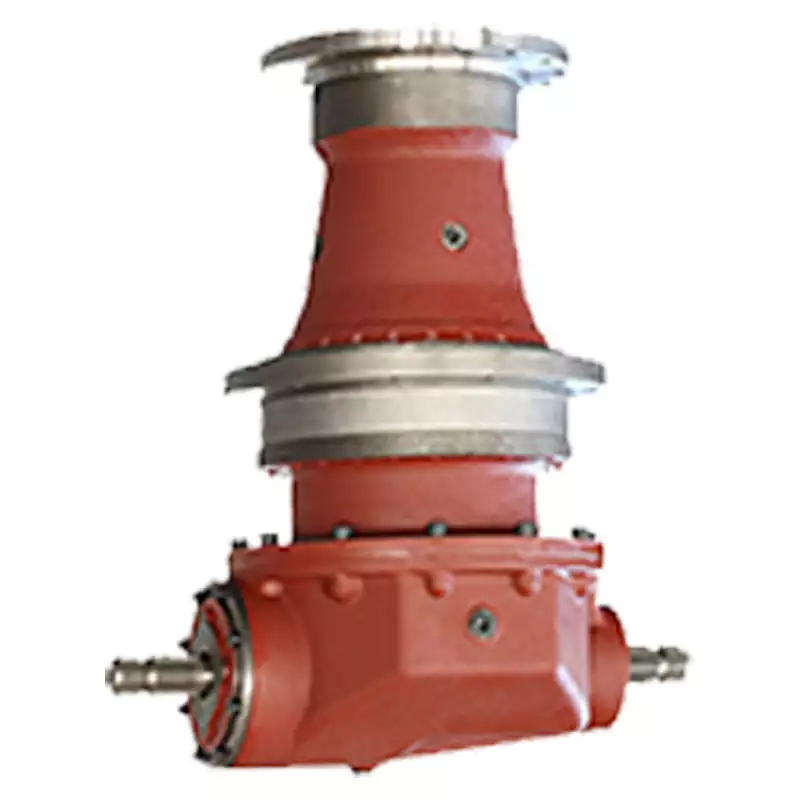
Considerations for Selecting Size and Gear Materials in Planetary Gearboxes
Choosing the appropriate size and gear materials for a planetary gearbox is crucial for optimal performance and reliability. Here are the key considerations:
1. Load and Torque Requirements: Evaluate the anticipated load and torque that the gearbox will experience in the application. Select a gearbox size that can handle the maximum load without exceeding its capacity, ensuring reliable and durable operation.
2. Gear Ratio: Determine the required gear ratio to achieve the desired output speed and torque. Different gear ratios are achieved by varying the number of teeth on the gears. Select a gearbox with a suitable gear ratio for your application’s requirements.
3. Efficiency: Consider the efficiency of the gearbox, which is influenced by factors such as gear meshing, bearing losses, and lubrication. A higher efficiency gearbox minimizes energy losses and improves overall system performance.
4. Space Constraints: Evaluate the available space for installing the gearbox. Planetary gearboxes offer compact designs, but it’s essential to ensure that the selected size fits within the available area, especially in applications with limited space.
5. Material Selection: Choose suitable gear materials based on factors like load, speed, and operating conditions. High-quality materials, such as hardened steel or specialized alloys, enhance gear strength, durability, and resistance to wear and fatigue.
6. Lubrication: Proper lubrication is critical for reducing friction and wear in the gearbox. Consider the lubrication requirements of the selected gear materials and ensure the gearbox is designed for efficient lubricant distribution and maintenance.
7. Environmental Conditions: Assess the environmental conditions in which the gearbox will operate. Factors such as temperature, humidity, and exposure to contaminants can impact gear material performance. Choose materials that can withstand the operating environment.
8. Noise and Vibration: Gear material selection can influence noise and vibration levels. Some materials are more adept at dampening vibrations and reducing noise, which is essential for applications where quiet operation is crucial.
9. Cost: Consider the budget for the gearbox and balance the cost of materials, manufacturing, and performance requirements. While high-quality materials may increase initial costs, they can lead to longer gearbox lifespan and reduced maintenance expenses.
10. Manufacturer’s Recommendations: Consult with gearbox manufacturers or experts for guidance on selecting the appropriate size and gear materials. They can provide insights based on their experience and knowledge of various applications.
Ultimately, the proper selection of size and gear materials is vital for achieving reliable, efficient, and long-lasting performance in planetary gearboxes. Taking into account load, gear ratio, materials, lubrication, and other factors ensures the gearbox meets the specific needs of the application.
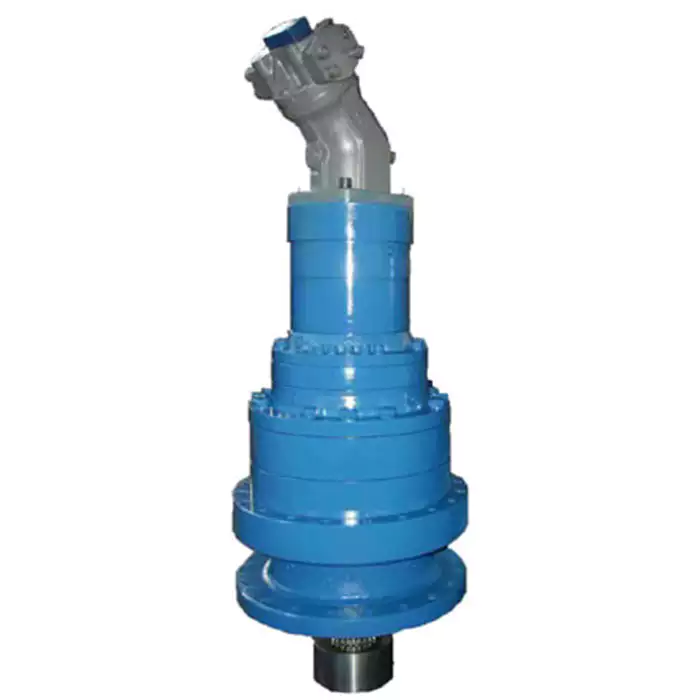
Contribution of Planetary Gearboxes to Efficient Industrial Automation and Robotics
Planetary gearboxes play a crucial role in enhancing the efficiency of industrial automation and robotics systems by offering several advantages:
1. Compact Design: Planetary gearboxes provide high power density and a compact form factor. This is essential in robotics and automation where space is limited and components need to be tightly integrated.
2. High Torque Density: Planetary gearboxes can achieve high torque output in a compact size, allowing robots and automated systems to handle heavy loads and perform demanding tasks efficiently.
3. Precision and Accuracy: The design of planetary gear systems ensures accurate and precise motion control. This is vital in robotics applications where precise positioning and smooth movement are required for tasks such as pick-and-place operations and assembly.
4. Redundancy: Some planetary gearboxes feature multiple stages and redundant configurations. This provides a level of built-in redundancy, enhancing the reliability of automation systems by allowing continued operation even if one stage fails.
5. Efficiency: Planetary gearboxes are designed for high efficiency, minimizing energy losses and ensuring that the power delivered to the output stage is effectively utilized. This efficiency is crucial for reducing energy consumption and optimizing battery life in robotic applications.
6. Speed Control: Planetary gearboxes allow for precise speed control, enabling robots to perform tasks at varying speeds as needed. This flexibility is essential for tasks that require different motion dynamics or speed profiles.
7. Reduction of Motor Loads: Planetary gearboxes can reduce the load on the motor by providing mechanical advantage through gear reduction. This allows smaller, more efficient motors to be used without sacrificing performance.
8. Shock Absorption: The inherent elasticity of gear teeth in planetary gearboxes can help absorb shocks and impacts, protecting the system components and ensuring smooth operation in dynamic environments.
9. Customization: Planetary gearboxes can be tailored to specific application requirements, including gear ratios, output configurations, and mounting options. This adaptability allows for optimal integration into various automation and robotics setups.
10. Maintenance and Durability: High-quality planetary gearboxes are designed for durability and low maintenance. This is especially important in industrial automation and robotics, where continuous operation and minimal downtime are essential.
Overall, planetary gearboxes contribute significantly to the efficient operation of industrial automation and robotics systems by providing the necessary torque, precision, compactness, and reliability required for these dynamic and demanding applications.
editor by CX 2024-01-15
China Custom 45mm 12V 24V 0.5W-100W High Torque BLDC or Brushed DC Gear Motor Planetary Gearbox with Encoder calculate gear ratio planetary gearbox
Product Description
Quiet stable and reliable for long life operation
| Motor type | 63ZYT-125-24 | |
| Protection grade | IP50 | |
| Duty cycle | S1 (100%) | |
| Rated voltage | 24 | V |
| Rated current | 4.9 | A |
| Input power | 117.6 | W |
| No-load current | 0.4 | A |
| Rated torque | 0.27 | Nm |
| Rated speed | 3300 | ±10% rpm |
| Rated output power | 93.3 | W |
| Friction torque | 2 | Ncm |
| efficiency | 80% | |
| Maximum torque | 1.3 | ±10% Nm |
| Maximum current | 23 | A |
| No-load speed | 3650 | ±10% rpm |
| Maximum power | 245 | W |
| Maximum shell temperature | 85 | ºC |
| Weight | 1.7 | Kg |
| Planetary gear box | F1130 | |
| Protection grade | IP65 | |
| Reduction ratio | 710.5:1 | |
| Rated torque | 120 | Nm |
| Maximum torque | 180 | Nm |
| Ambient temperature | -20 to 85 | ºC |
| Grease Smart | Smart top 28 | |
| Grease temperature range | -20 to 160 | ºC |
Jintian Imp. & Exp Co. Ltd opened in 2008 to facilitate international trade between China and the rest of the world. The young firm grew quickly, gaining a reputation for integrity, efficiency and astute knowledge of local market.
Throughout its 10 more years history, CZPT has sought to connect customers with opportunities. While that purpose has remained unchanged, CZPT has succeeded by positioning itself where the growth is and by aligning itself to the major economic trends of the time.
After being funded in ZheJiang , China to facilitate local and international trade, CZPT expanded rapidly to capture the increasing flow of commerce between Asia, Europe and North America. Since then, CZPT has continued to grow in line with changing trade patterns and developing markets, pioneering modern international trade practices in many countries. Built over 10 years, this global network is highly distinctive, difficult to replicate and ideally positioned for the world’s top trade corridors.
Our ability to connect customers remains absolutely central to the company’s strategy today, which aims to establish CZPT as the world”s leading international trade company. Above all, we remain dedicated to the purpose that CZPT was founded to serve: Connecting customers to opportunities, enabling businesses to CZPT and economies to prosper, and helping people to fulfill their hopes and dreams.
| Function: | Control, Driving |
|---|---|
| Casing Protection: | Protection Type |
| Number of Poles: | 8 |
| Certification: | ISO9001, CCC, CE |
| Brand: | Jintian |
| Maximum Current: | 23 |
| Samples: |
US$ 162/Piece
1 Piece(Min.Order) | |
|---|
| Customization: |
Available
| Customized Request |
|---|
How to Select a Planetary Gearbox for Your Applications
You can select the most suitable Planetary Gearbox for your applications after carefully checking the various features. You should also consider secondary features like noise level, corrosion resistance, construction, price, delivery time and service. You should also check if the constructor is available across the world, because some constructors operate faster than others. Some constructors even respond to your requests on the same day, while others deliver each planetary gearbox even if they are out of stock.
CZPT gearbox
An CZPT planetary gearbox is a high-quality, compact, and lightweight gearbox that distributes loads over several gears. The planetary gearbox has a polymer case that ensures quiet operation. The company is committed to the circular economy, investing in chemical recycling and promoting the use of recycled materials wherever possible. For more information, visit CZPT’s website or contact an CZPT expert today.
A planetary gearbox contains a sun gear, which is known as the input gear. The other gears are called planets, and these are mounted on a carrier, which is connected to an output shaft. A planetary gearbox is characterized by its high reduction ratios, energy savings, and compact design. It offers superior durability and trouble-free service. Whether you need a large or small planetary gearbox, you can find one to suit your needs.
The Standard series planetary gearboxes are a cost-effective alternative to premium series gearboxes. These gearboxes are suitable for applications requiring only mild backlash or with low IP65 protection. ABB positioners feature seven different gear unit variants, allowing for standardized mounting and stranded wire connections. The drygear(r) strain wave gear has a stranded wire connector and is available with a three-year warranty.
A planetary gearbox can be used for various applications, from lifting goods to loading and unloading products in a factory. The company has a wide product range for different applications, including plastic machinery and machine tools, pick-and-place robots, mill drives, and wind turbines. It can also be used to operate robot gripper systems. Its high-quality planetary gears are designed to last for many years, making it an ideal solution for many industries.
CZPT
A planetary gearbox is an essential component of many transport systems. These devices work by aligning the output and input shafts. The Reggiana planetary gearbox 2000 series includes bevel stages and linear variants. The company offers modularity and flexibility with output configurations in ten different gear sizes. Each planetary gearbox can also be customized to meet the specific needs of a specific application.
CZPT is the Australian branch of CZPT, a leading global manufacturer of planetary gearboxes. CZPT is located in Carrum Downs, south east of Melbourne, and is one of the leading suppliers of planetary reduction gears, hydraulic failsafe brakes, and wheel drives. The company aims to provide high-quality, durable products that can be used in a variety of applications.
A CZPT Plus Series Gear is designed to maximize flexibility in a variety of applications. The gearbox’s modular design allows for endless scalability. The CZPT Plus Series Gear is commonly used in mining operations, and is known for its raw output capabilities and low maintenance design. It is made with high-quality materials, and it is also available in multiple sizes for customized applications.
The multi-stage planetary gearbox can combine individual ratios to increase the overall multiplicative factor. The planetary gears may also be combined to increase the transmittable torque. The output shaft and drive shaft may rotate in opposite directions, or they can be fixed so the gearbox can function in either direction. If the ring gear is fixed, planetary gearboxes can be realized as multi-stage.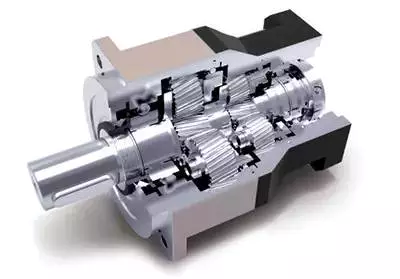
CZPT
The CZPT Planetary Gearbox is the perfect combination of compact size and high efficiency in power transmission. The compact design allows this gearbox to run silently while still delivering high power density and transmission efficiency. The CZPT Planetary Gearbox has several advantages. Unlike conventional planetary gearboxes, CZPT’s planetary gearbox features high power density, low torque, and optimum transmission efficiency.
CZPT’s products have been used in a variety of applications for many years, proving their reliability and quality. These products are renowned in the world for their reliability and quality. CZPT’s planetary gearboxes are backed by a five-year warranty. These features help customers choose a planetary gearbox that meets their needs and stays in top shape for years to come. But how do you test a planetary gearbox?
Figure 17 shows the response of a planetary gearbox to vibration. The maximum displacement in xg direction at a 50% crack level is shown by the dashed line. The signal in xg direction is called the xsignal. Moreover, the CZPT Planetary Gearbox’s vibration response is highly sensitive to the location of the bearings. For this reason, dynamic modeling of a planetary gearbox should consider bearing clearance.
CZPT’s hollow cup motor drive system features high reliability and low power consumption. The gearbox is compatible with industries with high quality standards, as there is no cogging torque. Its compact size and low electromagnetic noise make it ideal for a variety of applications. For industries with high product quality requirements, the CZPT Hollow Cup Motor Drive System is an excellent choice. It is also designed for vertical installation. You can even buy multiple CZPT products to meet your specific needs.
CZPT
With its PL series planetary gearboxes, CZPT has expanded its product portfolio to include more types of drive solutions. CZPT is one of the few companies to have won the Schneider Electric Supplier Award for Quality. In addition, its high-quality planetary gearboxes are highly customizable, allowing designers to customize each gearbox for the application at hand. Whether it is a geared pump or a stepper motor, CZPT’s PLE planetary gearboxes are built to meet the exact specifications of the application at hand.
The flange-mounted version of the planetary gearbox is comparable to its planetary counterpart. Using a flange-mounted planetary gearbox allows for a smaller, more compact design. This model also features a large-diameter output shaft, which helps achieve a higher level of torsional stiffness. This makes CZPT flange gearboxes particularly useful for applications where the direction of motion can change frequently. These gearboxes can be used with a wide variety of belts.
The PLQE 60-mm gearbox is used in Outrider’s single-stage design. Its gear ratio is 5:1, while its dual-stage version has a 15:1 gear ratio. Both gearboxes have identical mounting configurations, but the two-stage version is slightly longer.
The PLN series of planetary gearheads from CZPT are the standard for high-precision applications. They’re compatible with all major motor brands and sizes, and the company’s adapter kits are available to fit almost any motor. This makes CZPT gearheads one of the easiest to integrate into a complex machine. They’re also extremely easy to install, with the same torque as their corresponding spur gears.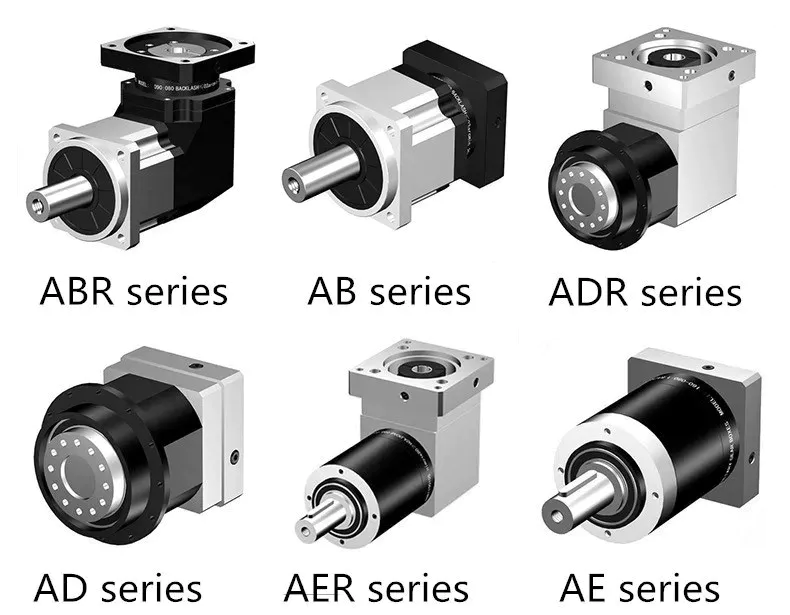
CZPT’s
If you are looking for an efficient solution for screw press applications, consider using CZPT’s 300M Planetary Gearbox. It has high axial and radial load capacities, compact design, high torque output, and torque arm. The 300M planetary gearbox is compatible with a variety of screw presses, including hydraulic press systems and digester systems. Its Torque control and direct coupling feature makes it easy to install.
CZPT’s small planetary gearboxes have an output torque of 20:1 from individual ratios of 5:1 and 4:1. They run silently and deliver maximum transmission efficiency. The planetary gears are mounted on a ring that is fixed around the center sun gear. The ring acts as an output torque converter for the next planet stage. This planetary gearbox has multiple stages and a maximum ratio of 20:1 can be created from individual ratios of 5:1 and 4:1.
CZPT Motor is an innovator in the design and manufacture of miniature motors for industrial robots. Its offerings include brushless DC and brushed DC motors, as well as planetary gearboxes, encoders, and brakes. CZPT’s products have a variety of uses in robotics, intelligent appliances, medical equipment, communication, and industrial automation. The company is also committed to providing custom designs based on customer specifications.
Another advantage of a planetary gearbox is its high power transmission efficiency. It is capable of approximately 3% per stage, allowing it to transmit more torque than a conventional single-stage gearbox. Planetary gearboxes are also compact and have a high torque-to-weight ratio. CZPT’s Planetary Gearbox is the best choice for many applications. This gearbox offers the highest efficiency and is ideal for small-scale production.
editor by CX 2023-10-26
China Custom Planetary Gearbox 109926 for Wirtgen W2000 Cold Milling Machine components of gearbox
Product Description
Wirtgen part.no 79353 gearbox and gear reduction 79354
WIRGTEN 705C2HS571B64J0HIV 7649 bonfiglioli gearbox
Product Description
11ton-13ton Dual Drum Vibratory Roller XD111 XD121 XD131
705C2H33C53J0HJVAT CAT PAVER DRIVE GEARBOX
Wirtgen GEARBOX 257128 257129 used on the Wirtgen cold milling machines 2228352 15716
Ходовой редуктор Wirtgen,гидромотор фрезы Wirtgen W series
| Machine type | Series range | Version advance drive | Gearbox and sealing kits | |||
| Drive gearbox | ||||||
| Gearbox | Sealing kit cpl. |
Face seal | Brake disc | |||
| Wirtgen W 350 | 0001 – 0058 | 46176 | 193511 | 53141 | 193482 | |
| 0059 – 0265 | 76491 | 88219 | 1 0571 9 | 193484 | ||
| 0266 – 9999 | ||||||
| Wirtgen W 35 | 0001 – 9999 | 76491 | 88219 | 1 0571 9 | 193484 | |
| Wirtgen W 35 DC | 0001 – 9999 | One wheel drive front | 76491 | 88219 | 1 0571 9 | 193484 |
| Four wheel drive front | 79354 | |||||
| Four wheel drive rear | 18571 | 193573 | ||||
| Wirtgen W 500 | 0112 – 5717 | Front | 53344 | 45665 | ||
| Rear left and right | 53345 | 193550 | 45665 | 144901 | ||
| 5718 – 9999 | Front | 53344 | 45665 | |||
| Rear left and right | 53345 | 193550 | 45665 | 144901 | ||
| Wirtgen W 50 08.05 | 0001 – 5710 | 3-wheel front | 170611 | 185046 | ||
| 4-wheel front | 170695 | |||||
| 5711 – 9999 | 3-wheel front | 186032 | ||||
| 4-wheel front | 186031 | 185045 | ||||
| 0001 – 0067 | Right rear | 17571 | ||||
| Left rear | 170610 | |||||
| 0068 – 5710 | Rear left and right | 170610 | ||||
| 5711 – 9999 | Right rear | 186095 | ||||
| Left rear | 186030 | |||||
| Wirtgen W 50 10.05 | 0001 – 9999 | 3-wheel front | 186032 | 185046 | ||
| 4-wheel front | 186031 | 185045 | ||||
| Right rear | 186095 | |||||
| Left rear | 186030 | |||||
| Wirtgen W 50 DC | 0001 – 0099 | 3-wheel front | 170615 | 185046 | ||
| 4-wheel front | 170696 | 185045 | ||||
| 5710 – 9999 | 3-wheel front | 76490 | 1 0571 9 | |||
| 4-wheel front | 187884 | |||||
| 0001 – 0050 | Right rear | 170613 | 185045 | |||
| Left rear | 170614 | |||||
| 0051 – 0099 | Rear left and right | 170614 | ||||
| 5710 – 9999 | Rear left and right | 186033 | ||||
| Wirtgen W 600 DC, W 1000 L |
0001 – 9999 | 3-wheel front | 76490 | 1 0571 9 | ||
| 3-wheel rear | 76491 | 88219 | 1 0571 9 | 193484 | ||
| 4-wheel front | 79353 | 1 0571 9 | ||||
| 4-wheel rear | 79354 | 88219 | 1 0571 9 | 193484 | ||
| Machine type | Series range | Version advance drive | Gearbox and sealing kits | |||
| Drive gearbox | ||||||
| Gearbox | Sealing kit cpl. |
Face seal | Brake disc | |||
| Wirtgen W 1000 | 0001 – 571 | Front and rear | 46176 | 193511 | 53141 | 193482 |
| 0011 – 571 | Front and rear | 76491 | 88219 | 1 0571 9 | 193484 | |
| Wirtgen W 60, W 100 | 0001 – 9999 | 3-wheel front | 76490 | 1 0571 9 | ||
| 3-wheel rear | 76491 | 88219 | 1 0571 9 | 193484 | ||
| 4-wheel front | 79353 | 1 0571 9 | ||||
| 4-wheel rear | 79354 | 88219 | 1 0571 9 | 193484 | ||
| Wirtgen W 1000 F, W 1200 F, W 1300 F 07.10 |
0001 – 0038 | Wheel machine | 76491 | 88219 | 1 0571 9 | 193484 |
| Chain machine | 121257 | |||||
| 0039 – 0149 | Wheel machine | 76491 | ||||
| Chain machine | 121257 | |||||
| 0150 – 0571 | Wheel machine | 76491 | ||||
| Chain machine | 121257 | |||||
| 0571 – 9999 | Wheel machine | 76491 | ||||
| Chain machine | 121257 | |||||
| Wirtgen W 100 F, W 120 F, W 130 F |
0001 – 9999 | Wheel machine | 76491 | 88219 | 1 0571 9 | 193484 |
| Chain machine | 121257 | |||||
| 1300 – 2000 DC | 0001 – 0058 | Front | 76491 | 88219 | 1 0571 9 | 193484 |
| Rear | 76490 | 1 0571 9 | ||||
| 0059 – 9999 | Front | 76491 | 88219 | 1 0571 9 | 193484 | |
| Rear | 76490 | 1 0571 9 | ||||
| Wirtgen W 1500, W 1900 |
0001 – 9998 | Front | 76491 | 88219 | 1 0571 9 | 193484 |
| Rear | 76490 | 1 0571 9 | ||||
| 9998 – 9999 | Front | 257129 | 88219 | 1 0571 9 | 193484 | |
| Rear | 257128 | 1 0571 9 | ||||
| Wirtgen W 150 | 0001 – 9999 | Front and rear | 121257 | 88219 | 1 0571 9 | 193484 |
| Wirtgen W 2000 | 0001 – 9999 | Front | 15716 | 193547 | 157184 | 123648 |
| Rear | 15715 | 157184 | ||||
| Wirtgen 2100 DC | 0001 – 0041 | Front | 34959 | 53873 | 5571 | |
| Rear | 34958 | 53872 | 5571 | 4571 | ||
| 0042 – 0120 | Front | 45869 | 5571 | |||
| Rear | 45868 | 53873 | 5571 | 4571 | ||
| 0121 – 0269 | Front | 72844 | 5571 | |||
| Rear | 72842 | 53873 | 5571 | 4571 | ||
| 5710 – 0345 | Front | 85960 | 15718 | |||
| Rear | 85961 | 15713 | 15718 | 15712 | ||
| 0346 – 9999 | Front | 85960 | 15718 | |||
| Rear | 85961 | 15713 | 15718 | 15712 | ||
| Machine type | Series range | Version advance drive | Gearbox and sealing kits | |||
| Drive gearbox | ||||||
| Gearbox | Sealing kit cpl. |
Face seal | Brake disc | |||
| Wirtgen W 2100 | 0001 – 0091 | Front | 139571 | 193512 | 156316 | 156326 |
| Rear | 139571 | 156316 | ||||
| 0092 – 0117 | Front | 139571 | 193512 | 156316 | 156326 | |
| Rear | 139571 | 156316 | ||||
| 0118 – 9999 | Front | 139571 | 193512 | 156316 | 156326 | |
| Rear | 139571 | 156316 | ||||
| Wirtgen W 2200 | 0001 – 5718 | Front | 117831 | 193514 | 144398 | 144305 |
| Rear | 117830 | 144398 | ||||
| 5719 – 9999 | Front | 117831 | 193514 | 144398 | 144305 | |
| Rear | 117830 | 144398 | ||||
| Wirtgen WR 2000 | 0001 – 9999 | 166995 | 193513 | 181697 | 181695 | |
| Wirtgen WR 2400 | 0001 – 0003 | 80571 | 133331 | 51433 | 132160 | |
| 0004 – 9999 | 188848 | 2063096 | 181697 | 156326 | ||
| Wirtgen WR 2500 | 0001 – 5719 | 80571 | 51433 | |||
| 0110 – 9999 | 80571 | 133331 | 51433 | 132160 | ||
| Wirtgen WR 2500 S | 0001 – 9999 | 80571 | 133331 | 51433 | 132160 | |
| Wirtgen W 350 | 0001 – 0058 | 66627 | 84811 | 86496 | ||
| 0059 – 0265 | 66627 | |||||
| 0266 – 9999 | 101979 | |||||
| Wirtgen W 35 | 0001 – 9999 | 101979 | 84811 | 86496 | ||
| Wirtgen W 35 DC | 0001 – 5719 | 18 0571 | 186608 | 186527 | ||
| 5710 – 9999 | 257190 | |||||
| Wirtgen W 500 | 0112 – 5717 | 64547 | ||||
| 5718 – 9999 | 72605 | 37514 | ||||
| Machine type | Series range | Gearbox and sealing kits | ||||
| Milling drum gearbox | Pump splitter gearbox | |||||
| Gearbox | Sealing ring | Face seal | Gearbox | Sealing ring | ||
| Wirtgen W 50 08.05 | 0001 – 9999 | 168008 | 7762 | 186527 | ||
| Wirtgen W 50 10.05 | 0001 – 0123 | 168008 | 7762 | 186527 | ||
| 0124 – 9999 | 2086584 | 7762 | 186527 | |||
| Wirtgen W 50 DC | 0001 – 9999 | 164068 | 7762 | 186528 | ||
| Wirtgen W 600 DC | 0001 – 9999 | 92668 | 79827 | 155375 | ||
| Wirtgen W 60 | 0001 – 9999 | 92668 | 79827 | 155375 | ||
| Wirtgen W 1000 L | 0001 – 9999 | 70197 | 79827 | 51433 | ||
| Wirtgen W 1000 | 0001 – 571 | 70197 | 79827 | 51433 | ||
| Wirtgen W 100 | 0001 – 9999 | 70197 | 79827 | 51433 | ||
| Wirtgen W 1000 F, W 1200 F, W 1300 F |
0001 – 0038 | 90127 | 79827 | 51433 | 90054 | 25105* 139936 |
| 0039 – 0131 | 90127 | 79827 | 51433 | 12970 | ||
| 0132 – 0149 | 90127 | 79827 | 51433 | 138848 | 139937* 139938 |
|
| 0150 – 0571 | 90127 | 79827 | 51433 | 138193 | 25105* 139936 |
|
| 0571 – 0869 | 90127 | 79827 | 51433 | 155735 | ||
| 0571 – 9999 | 90127 | 79827 | 51433 | 2044777 | ||
| Wirtgen W 100 F, W 120 F, W 130 F |
0001 – 9999 | 190070 190073 FCS |
25105 | 51433 | 195711 | 139936* 2061878 |
| Wirtgen 1300 – 2000 DC | 0001 – 0058 | 52364 | 73747 | 51433 | 36963 | 84811 |
| 0059 – 9999 | 87709 | 15714 | ||||
| Wirtgen W 1500 | 0001 – 9999 | 87708 | 73747 | 15714 | 36963 | 84811 |
| Wirtgen W 1900 | 0001 – 5713 | 87708 | 73747 | 15714 | 36963 | 84811 |
| 5714 – 9999 | 126869 | 155158 | 129617 | |||
| Wirtgen W 2000 | 0001 – 9999 | 126869 | 155158 | 129617 | 113038 | 25106* 82052 |
| Wirtgen 2100 DC | 0042 – 0345 | 42133 | 37502 | 36963 | 84811 | |
| 0346 – 9999 | 157114 | 63606 | 123738 | |||
| Wirtgen W 2100 | 0001 – 0091 | 136986 | 155158 | 154190 | 14 0571 | 25106* 82052 |
| 0092 – 0117 | 172841 | |||||
| 0118 – 9999 | 177662 | |||||
| Wirtgen W 2200 | 0001 – 5718 | 112600 | 7750 | 161345 | 113042 | 25106* 178531 |
| 5719 – 9999 | 180038 | 45451 | ||||
| Wirtgen WR 2000 | 0001 – 9999 | 166990 | 191906 | 171519 | 25106* 82052 |
|
| Wirtgen WR 2400 | 0001 – 9999 | 166990 | 191906 | 195712 | 25106* 82052 |
|
| Wirtgen WR 2500 | 0001 – 0058 | 80018 | 11217 | 36963 | 84811 | |
| 0059 – 5719 | 99913 | 133332 | ||||
| 0110 – 5712 | 99913 | 133332 | 11217 | 1 0571 7 | ||
| 5713 – 0309 | 130940 | 144443 | 144440 | |||
| 571 – 9999 | 156488 | 144443 | ||||
| Wirtgen WR 2500 S | 0001 – 9999 | 156488 | 144443 | 144440 | 1 0571 7 | 84811 |
| Wirtgen WS 2200, WS 2500 | 0001 – 9999 | 191906 | 7765 | 106467 | ||
Two light-duty tandem vibratory rollers
Dual Drum Vibratory Roller
Cummins engine
| Type | XD111 | XD121 | XD131 | |
| Working mass(kg) | 11230 | 12300 | 13080 | |
| Mass distributed on front drum(kg) | 5670 | 6210 | 6540 | |
| Mass distributed on rear drum(kg) | 5560 | 6090 | 6540 | |
| Static linear load on front drum(N/cm) | 292 | 286 | 301 | |
| Static linear load on rear drum(N/cm) | 287 | 280 | 301 | |
| Speed range(km/h) | 0-10 | 0-10 | 0-10 | |
| Theoretical gradeability(%) | 30 | 30 | 30 | |
| Min. inner/outer turning radius(mm) | 4000/5900 | 3870/6000 | 3870/6000 | |
| Crab-walking distance (mm) | 200 | 200 | 200 | |
| Min. ground clearance(mm) | 420 | 420 | 420 | |
| Wheel base (mm) | 4000 | 4000 | 4000 | |
| Steering angle(±) | 46 | 46 | 46 | |
| Swinging angle(±) | 12 | 12 | 12 | |
| Vibrating frequency(HZ) | 30-48 | 30-45 | 30-45 | |
| Nominal amplitude(mm) | 0.41/0.8 | 0.41/0.8 | 0.4/0.72 | |
| Centrifugal force(kn) | 66/133 | 70/140 | 82/150 | |
| Model and manufacturer | COMMINS 483.9 | |||
| Rated rotating speed(t/min) | 2200 | 2200 | 2200 | |
| Rated Power(KW)93 | 93 | 93 | 93 | |
| Rated oil wear (g. kw/h)229 | 229 | 229 | 229 | |
| Water tank capacity(L) | 2*450 | 2*450 | 2*450 | |
| Fuel tank capacity(L) | 200 | 220 | 220 | |
Cheapest Price Hydraulic Single Drum Vibratory Compactor Xs142j in Philippines
Xcm Hydraulic Single-Drum Vibratory Rollers Capacity 14 Tons Xs142j in Indonesia
Compacting Price CZPT Single Drum Road Roller Xs142j
Brand New CZPT 14t Single Drum Vibratory Road Roller Xs142j
12 Ton Hydraulic Tandem Vibratory Roller Compactor Xd122
Liugong 12 Ton Double Drum Road Roller Price Clg6212e
Xcm 18 Ton Road Roller Xs182j
Sdlg 14 Ton Vibratory Road Roller Compactor RS8140
2017 New Price CZPT Pneumatic Tire Road Roller Clg630r
14 Tons Double Drum Vibratory Roller Xd142
Hot Sale Road Compactor 10 Ton Tandem Vibratory Roller Xd102
3 Ton CZPT Popular Vibratory Mini Road Roller (Ltc203)
11 Ton Hydraulic Double Drum Road Roller Xd111e
12 Ton Hydraulic Double Drum Road Roller Xd121e
11300kg Double Drum Roller CZPT Xd111e
11 Tons Hydraulic Vibratory Double Drum Compactor Xd111e
Liugong Vibration Road Roller Capacity Clg614
Cheap Price Xihu (West Lake) Dis.n 16ton Road Roller Yz16-7 Sale
Xs202j 20 Ton Single Drum Vibratory Road Roller
11 Ton Vibratory Double Drum Road Roller Xd111e
Product Groups
Wheel Loader
Truck Crane
Excavator
Bulldozer
Motor Grader
Road Roller
Backhoe Loader
Heavy Truck
Crawler Crane
Tower crane
| Application: | Motor |
|---|---|
| Function: | Distribution Power |
| Layout: | Three-Ring |
| Hardness: | Hardened Tooth Surface |
| Installation: | Torque Arm Type |
| Step: | Three-Step |
| Customization: |
Available
| Customized Request |
|---|
Challenges in Achieving High Gear Ratios with Compactness in Planetary Gearboxes
Designing planetary gearboxes with high gear ratios while maintaining compactness presents several challenges:
- Space Constraints: As the gear ratio increases, the number of gear stages required also increases. This can lead to larger gearbox sizes, which may be challenging to accommodate in applications with limited space.
- Bearing Loads: Higher gear ratios often result in increased loads on the bearings and other components due to the redistribution of forces. This can impact the durability and lifespan of the gearbox.
- Efficiency: Each gear stage introduces losses due to friction and other factors. With multiple stages, the overall efficiency of the gearbox can decrease, affecting its energy efficiency.
- Complexity: Achieving high gear ratios can require complex gear arrangements and additional components, which can lead to increased manufacturing complexity and costs.
- Thermal Effects: Higher gear ratios can lead to greater heat generation due to increased friction and loads. Managing thermal effects becomes crucial to prevent overheating and component failure.
To address these challenges, gearbox designers use advanced materials, precise machining techniques, and innovative bearing arrangements to optimize the design for both compactness and performance. Computer simulations and modeling play a critical role in predicting the behavior of the gearbox under different operating conditions, helping to ensure reliability and efficiency.
Considerations for Selecting Size and Gear Materials in Planetary Gearboxes
Choosing the appropriate size and gear materials for a planetary gearbox is crucial for optimal performance and reliability. Here are the key considerations:
1. Load and Torque Requirements: Evaluate the anticipated load and torque that the gearbox will experience in the application. Select a gearbox size that can handle the maximum load without exceeding its capacity, ensuring reliable and durable operation.
2. Gear Ratio: Determine the required gear ratio to achieve the desired output speed and torque. Different gear ratios are achieved by varying the number of teeth on the gears. Select a gearbox with a suitable gear ratio for your application’s requirements.
3. Efficiency: Consider the efficiency of the gearbox, which is influenced by factors such as gear meshing, bearing losses, and lubrication. A higher efficiency gearbox minimizes energy losses and improves overall system performance.
4. Space Constraints: Evaluate the available space for installing the gearbox. Planetary gearboxes offer compact designs, but it’s essential to ensure that the selected size fits within the available area, especially in applications with limited space.
5. Material Selection: Choose suitable gear materials based on factors like load, speed, and operating conditions. High-quality materials, such as hardened steel or specialized alloys, enhance gear strength, durability, and resistance to wear and fatigue.
6. Lubrication: Proper lubrication is critical for reducing friction and wear in the gearbox. Consider the lubrication requirements of the selected gear materials and ensure the gearbox is designed for efficient lubricant distribution and maintenance.
7. Environmental Conditions: Assess the environmental conditions in which the gearbox will operate. Factors such as temperature, humidity, and exposure to contaminants can impact gear material performance. Choose materials that can withstand the operating environment.
8. Noise and Vibration: Gear material selection can influence noise and vibration levels. Some materials are more adept at dampening vibrations and reducing noise, which is essential for applications where quiet operation is crucial.
9. Cost: Consider the budget for the gearbox and balance the cost of materials, manufacturing, and performance requirements. While high-quality materials may increase initial costs, they can lead to longer gearbox lifespan and reduced maintenance expenses.
10. Manufacturer’s Recommendations: Consult with gearbox manufacturers or experts for guidance on selecting the appropriate size and gear materials. They can provide insights based on their experience and knowledge of various applications.
Ultimately, the proper selection of size and gear materials is vital for achieving reliable, efficient, and long-lasting performance in planetary gearboxes. Taking into account load, gear ratio, materials, lubrication, and other factors ensures the gearbox meets the specific needs of the application.
Impact of Gear Ratio on Output Speed and Torque in Planetary Gearboxes
The gear ratio of a planetary gearbox has a significant effect on both the output speed and torque of the system. The gear ratio is defined as the ratio of the number of teeth on the driven gear (output) to the number of teeth on the driving gear (input).
1. Output Speed: The gear ratio determines the relationship between the input and output speeds of the gearbox. A higher gear ratio (more teeth on the output gear) results in a lower output speed compared to the input speed. Conversely, a lower gear ratio (fewer teeth on the output gear) leads to a higher output speed relative to the input speed.
2. Output Torque: The gear ratio also affects the output torque of the gearbox. An increase in gear ratio amplifies the torque delivered at the output, making it higher than the input torque. Conversely, a decrease in gear ratio reduces the output torque relative to the input torque.
The relationship between gear ratio, output speed, and output torque is inversely proportional. This means that as the gear ratio increases and output speed decreases, the output torque proportionally increases. Conversely, as the gear ratio decreases and output speed increases, the output torque proportionally decreases.
It’s important to note that the gear ratio selection in a planetary gearbox involves trade-offs between output speed and torque. Engineers choose a gear ratio that aligns with the specific application’s requirements, considering factors such as desired speed, torque, and efficiency.
editor by CX 2023-10-26
China Custom 12V 20rpm DC Gear Motor Planetary 36mm Gearbox CZPT planetary gearbox
Product Description
A. Specification of 12V 20RPM DC Gear Motor Planetary 36MM Gearbox:
1. Voltage: 12/24V
2. Speed: 1.2-2000RPM
3. Torque: 0.2-50Kgf.cm
4. Output Power: 1-5W
5. Gearbox Ratio: 1:3.7 to 1: 3736
6. Gearbox Diameter: 36mm
7. Gearbox Length: 25.1-50.9mm
8. Motor Length: 29.1mm
9. Shaft Diameter: 8mm
10. Shaft Length: Customized
Note: The data sheet is only for reference, We can make the motor according to your requirement after Evaluation
How to calculate the motor with gearbox output specs?
1. Output Speed(No-load)=Motor Speed(No-load)/Reduction Ratio
2. Output Torque=Motor Torque*Reduction Ratio*Gearbox Efficiency
e.g.:
PG36GR124500-19.2K
1. Output Speed(No-load)=4500/19.2=234RPM
2. Output Torque=67.6*19.2*81%=1051.3g.cm≈1kg.cm=0.1Nm (Should not be higher than Max. Gear Running Torque)
B. Company Capacity
HangZhou CZPT Motor Co. Ltd is a manufacturer and exporter of various of motors with over 10 years experience.
Our product ranges include:
1) DC Brush motor: 6-130mm diameter, 0.01-1000W output power
2) DC Spur Gear Motor: 12-110mm diameter, 0.1-300W output power
3) DC Planeary Gear Motor: 10-82mm diameter, 0.1-100W output power
4) Brushless DC Motor: 28-110mm, 5-1500W output power
5) Stepper Motor: NEMA 08 to NEMA 43, Can with gearbox and lead screw
6) Servo Motor: 42mm to 130mm diameter, 50-4000w
7) AC Gear Motor: 49 to 100mm diameter, 6-140 output power
1. Production Line:
2. Testing Equipment:
3. Certificates:
4. Customer Visits:
6. FAQ:
Q: What’s your main products?
A:We currently produce Brushed Dc Motors, Brushed Dc gear Motors, Planetary Dc Gear Motors, Brushless Dc Motors, Stepper motors and Ac Motors etc. You can check the specifications for above motors on our website and you can email us to recommend needed motors per your specification too.
Q:How to select a suitable motor?
A:If you have motor pictures or drawings to show us, or you have detailed specs like voltage, speed, torque, motor size, working mode of the motor, needed life time and noise level etc, please do not hesitate to let us know, then we can recommend suitable motor per your request accordingly.
Q: Do you have customized service for your standard motors?
A:Yes, we can customize per your request for the voltage, speed, torque and shaft size/shape. If you need additional wires/cables soldered on the terminal or need to add connectors, or capacitors or EMC we can make it too.
Q:Do you have individual design service for motors?
A:Yes, we would like to design motors individually for our customers, but it may need some mould charge and design charge.
Q:Can I have samples for testing first?
A:Yes, definitely you can. After confirmed the needed motor specs, we will quote and provide a proforma invoice for samples, once we get the payment, we will get a PASS from our account department to proceed samples accordingly.
Q:How do you make sure motor quality?
A:We have our own inspection procedures: for incoming materials, we have signed sample and drawing to make sure qualified incoming materials; for production process, we have tour inspection in the process and final inspection to make sure qualified products before shipping.
Q:What’s your lead time?
A:Generally speaking, our regular standard product will need 25-30days, a bit longer for customized products. But we are very flexible on the lead time, it will depends on the specific orders
Q:What’s your payment term?
A:For all our new customers, we will need 40% deposite, 60% paid before shipment.
Q:When will you reply after got my inquiries?
A:We will response within 24 hours once get your inquires.
Q:How can I trust you to make sure my money is safe?
A:We are certified by the third party SGS and we have exported to over 85 countries up to June.2017. You can check our reputation with our current customers in your country (if our customers do not mind), or you can order via alibaba to get trade assurance from alibaba to make sure your money is safe.
Q:What’s the minimum order quantity?
A:Our minimum order quantity depends on different motor models, please email us to check. Also, we usually do not accept personal use motor orders.
Q:What’s your shipping method for motors?
A:For samples and packages less than 100kg, we usually suggest express shipping; For heavy packages, we usually suggest air shipping or sea shipping. But it all depends on our customers’ needs.
Q:What certifications do you have?
A:We currently have CE and ROSH certifications.
Q:Can you send me your price list?
A:Since we have hundreds of different products, and price varies per different specifications, we are not able to offer a price list. But we can quote within 24 hours once got your inquirues to make sure you can get the price in time.
Q:Can I visit your company?
A:Yes, welcome to visit our company, but please let us know at least 2 weeks in advance to help us make sure no other meetings during the day you visit us. Thanks!
Weclome contact with us if have any questions about this motor or other products!
| Application: | Universal, Household Appliances, Power Tools, Curtain and Others |
|---|---|
| Operating Speed: | Low Speed |
| Function: | Driving |
| Casing Protection: | Open Type |
| Structure and Working Principle: | Brush |
| Type: | DC Gear Motor |
| Samples: |
US$ 15/Piece
1 Piece(Min.Order) | |
|---|
| Customization: |
Available
| Customized Request |
|---|
What is a Planetary Gearbox?
A planetary gearbox is a mechanical device in which the teeth of a planet mesh with the teeth of its sun or ring. The number of teeth and the spacing of planets will determine whether the teeth mesh correctly. In this article, we will learn more about planetary gearboxes. Besides understanding their working, you can also learn how to design your own. Here are some examples:
planetary gearboxes
If your car has an automatic transmission, then a planetary gearbox is the type you have. It is possible to find out if you have this type of gearbox by consulting the owner’s manual, calling the service department of your car’s manufacturer, or conducting a search using your favorite search engine. However, planetary gears are more complex and have many more components than standard gearboxes. The following information will explain more about this type of gearbox.
Planetary gearboxes use three different gear types to transmit torque. The sun gear sits in the center of the gear assembly, while the other gears rotate around it. A carrier connects the two gears, and is designed to set the spacing between them. When the gears are rotated, the carrier will spin, enabling the entire assembly to work together. The carrier also incorporates the output shaft. For this gearbox to work effectively, it must meet the application’s requirements.
There are three main types of planetary gearboxes: the basic model is highly efficient and transmits 97% of the power input. The earliest models are not complex, but they do have some key differences. Some of these differences make them ideal for various applications. For example, a planetary gearbox can operate in alternating and continuous operation, with the output support having internal grooving. Some designs have more than one output shaft, allowing the user to choose the configuration and torque that is best for their application.
One of the main differences between a planetary gearbox and a conventional one is the way the planetary parts move. A planetary gearbox may have multiple axes for increased torque. A planetary gearbox can provide a torque up to 113,000 N.m. by rotating its maximum teeth simultaneously. They are the ideal choice for space-constrained applications. For instance, a car with small spaces can install one with ease.
A planetary gearbox’s gear ratio is determined by the ratio of the sun gear to the ring gear. The number of teeth on the sun gear is a way to adjust the gear ratio. Smaller sun gears result in larger planetary gear ratios, while larger ones cause a decrease in torque. The ratio between planetary gears ranges from 3:1 to 10:1, with the lowest ratio being three. The greatest possible ratio is 10:1.
A planetary gearbox has many benefits. The compact design makes them a more efficient choice for small motors and is advantageous for servo functions. Planetary gearboxes have low inertia, which is an important factor, especially in servo applications, since the inertia of the gearbox adds to the motor’s load inertia. The planetary gearboxes are typically lubricated with grease or oil, so you don’t need to worry about re-lubrication or maintenance.
planetary gearboxes with output shaft
The advantages of planetary gearboxes are numerous. They are widely used in many applications, from automobiles to medical equipment, goods & personnel lifts to machine tools. They are also used in derrick & dockyard cranes and slewing drives. These gearboxes are available in various sizes and shapes, ranging from small to extremely large. There are many different types, and each is designed to suit its intended use.
The LP generation 3 gearhead series combines maximum quality with economic precision in a low-backlash planetary gearbox. The output shaft version is especially suited for high-speed, highly dynamic cyclic operation. Another version is the SP+ HIGH SPEED. The SP+ high-speed version is designed to achieve maximum speeds while in continuous operation. If you need a planetary gearbox with an output shaft, look no further. It is the best choice for many applications.
As the name suggests, a planetary gearbox incorporates planetary parts and an output shaft. The outer gears (also called the planetary gears) are connected by a carrier to the output shaft. The carrier is then connected to the output shaft by a ring. There are two or more planetary gears inside the planetary gearbox. Each gear is connected to a carrier, which is connected to the output shaft.
An epicyclic planetary gear train can be assembled so that the planet gear rolls around the sun gear. In the wheel drive planetary gearbox, the planetary gears are grouped over the housing to optimize the size and weight of the system. The planetary gear train can handle torques as high as 332,000 N.m., with the ring gear being fixed while the sun gear is movable.
Another advantage of a planetary gearbox is that it uses many teeth at once. This allows for high speed reduction and high torque transmission, and it is extremely compact. Planetary gearboxes with output shaft are ideal for space-constrained applications. Their compact size and minimal weight make them a popular choice in many industries. They are also known as epicyclic gears and are used in many different types of machines.
A planetary gearbox can have three components. A central sun gear, an outer ring known as the inner gear, and an output shaft. These three components are linked by a carrier. The carrier rotates so that the input and output gears are in sync. They also have a standard gap between the gears. The carrier also acts as the output shaft. They can be used to create small machines, such as a bicycle acceleration hub.
planetary gearboxes with integer number of teeth
When designing a planetary gearbox, one must determine the amount of tooth count. This figure is known as the mesh load factor Kg, and is based on the normal tooth forces that are generated in each mesh. The number of planets, the error in the gear design, and the rigidity of the housing all affect Kg. Depending on the type of application, Kg can be calculated by using different standards.
In a typical planetary gearbox, the ratio is an integer number, and the lowest is 3:1. At a ratio of 10, the sun gear is too large and the sun wheel is too low to provide a sufficient amount of torque. In most cases, the ratio is an integer value, and the teeth are evenly spaced. The gear mesh is then balanced to grade 2. The carrier is measured three-dimensionally to detect the accuracy of the planet pin hole in the carrier.
In the simplest case, each planetary gear mesh produces a dynamic signal at its mesh frequency. These signals can cancel or reinforce in various ways. A helix angle, however, introduces axial forces into the gear mesh, which can be cancelled or reinforced in the same way as torques. As the helix angle is an integer number, this planetary gear model does not necessarily require infinite precision.
The resulting motion period is measured in rotational angles. This figure can be used to determine fault diagnosis and calculate the minimum data length required. It can also be used to calculate the kinematic motion of a faulty planet gear tooth. It is important to note that fault-mesh motion is not instantaneous, and therefore, it requires a sufficient amount of time to fully mesh a faulty planet gear.
The load-share factor is similar to that of spur and helical gearboxes, and can be used to calculate dynamic load sharing. When the load share factor is low, the individual gear meshes are slightly loaded. Deflections can vary, especially with high-precision gears. Therefore, the design process should incorporate the tolerance chain. This will ensure the correct ratio of gear mesh.
A planetary gearbox is a type of planetary gear system that is used in motors. It has a sun gear at the center and a set of outer gears. Each gear turns according to its axis around the sun. They are interconnected by a ring component and are connected to each other through a carrier. The carrier also includes the output shaft. And since the sun gear is centered, the mesh is standard.
As an added benefit, planetary gearboxes have sliding surfaces, which reduce noise and vibration. Despite the high-quality of planetary gearboxes, it is important to properly lubricate them to avoid wear and tear. CZPT uses CZPT. In order to make the planetary gearboxes last a long time, the lubricant is usually incorporated in the planetary gearbox.
editor by CX 2023-10-21
China Custom High Torque Low Weight High Precision Low Noise Metal Cutted Planetary Gearhead Gearbox differential gearbox
Product Description
Product overview:
Planetary gearheads feature extremely high power transmission with a very short design. The modular design and the scaled stages provide the basis for a customer-specific solution. Metal components make use in a wide range of applications possible.At the same time they have a very compact form, low weight, and excellent efficiency. Self-centering planet gears ensure a symmetrical force distribution. The ring gear also forms the housing of the gearbox. The gearbox output shaft is supported in 2 ball bearings so that it can withstand high axial and radial loads. The gearboxes are customized, e.g. for use in especially low ambient temperatures, or as high-power gearboxes with reinforced output shafts, or with special lubricants for very long service life.
Typical applications:
- ATM in bank,Robot,Door-lock,Auto shutter, USB fan,Slot machine,Money detector, Coin refund devices
- Currency count machine, Towel dispensers, Automatic doors,Peritoneal machine
- Automatic TV rack, Office equipemt ,Household appliances,Automatic, medical screwdriver, robotic arms
- Lab stirrer, Cosmetology instrument, Medical devices, Hairdressing equipment,Cameras,Health-care articles
Miscellanea:
- Please contact us to get detailed specifications and drawings for the geared motor you’re looking for.
- We are able to design and produce the geared motor you specified.(OEM & ODM).
- Please visit us at silent to get more information.
Factory overview:
HangZhou Silent Industry Co.,Ltd is a professional manufacturer specialized in development, production and sales of micro geared motor, small module gear, and the miniature precision planetary gearbox for more than 20 years. We provide overall transmission solutions for smart home and robot, medical devices, industrial automation, intelligent equipments, sunshade industry, aerospace etc.
We are a national high-tech enterprise and have obtained more than 30 patents. Our products are characterized by high precision and high torque, low noise and long service life. All gears of the gear motors are developed and produced by our own gear department. The gears’ precision can reach ISO 8 level, which ensures the guaranteed quality control from design to production. At the same time, we can develop, design and produce according to the needs of customers.We’re looking for business partners all around the world to work and develop together.
Welcome to our company, and we will always provide you with satisfactory consulting, manufacturing and service.
Concentrating on micro reduction motor for 16 years
Independent research and development of planetary gearmotor (8mm-62mm)
High torque and high efficience, low noise and long life
ISO9001/14001, IATF16949 quality system certificated
World-class quality
Custom-tailor to requirements
Be our partners
| Application: | Motor, Electric Cars, Motorcycle, Machinery, Marine, Toy, Agricultural Machinery, Car, Medical Robots,Auto Parts… |
|---|---|
| Function: | Change Drive Torque |
| Layout: | Three-Ring |
| Hardness: | Hardened Tooth Surface |
| Installation: | Horizontal Type |
| Step: | Three-Step |
| Samples: |
US$ 10/Piece
1 Piece(Min.Order) | |
|---|
| Customization: |
Available
| Customized Request |
|---|
Challenges in Achieving High Gear Ratios with Compactness in Planetary Gearboxes
Designing planetary gearboxes with high gear ratios while maintaining a compact form factor poses several challenges due to the intricate arrangement of gears and the need to balance various factors:
Space Constraints: Increasing the gear ratio typically requires adding more planetary stages, resulting in additional gears and components. However, limited available space can make it challenging to fit these additional components without compromising the compactness of the gearbox.
Efficiency: As the number of planetary stages increases to achieve higher gear ratios, there can be a trade-off in terms of efficiency. Additional gear meshings and friction losses can lead to decreased overall efficiency, impacting the gearbox’s performance.
Load Distribution: The distribution of loads across multiple stages becomes critical when designing high gear ratio planetary gearboxes. Proper load distribution ensures that each stage shares the load proportionally, preventing premature wear and ensuring reliable operation.
Bearing Arrangement: Accommodating multiple stages of planetary gears requires an effective bearing arrangement to support the rotating components. Improper bearing selection or arrangement can lead to increased friction, reduced efficiency, and potential failures.
Manufacturing Tolerances: Achieving high gear ratios demands tight manufacturing tolerances to ensure accurate gear tooth profiles and precise gear meshing. Any deviations can result in noise, vibration, and reduced performance.
Lubrication: Adequate lubrication becomes crucial in maintaining smooth operation and reducing friction as gear ratios increase. However, proper lubrication distribution across multiple stages can be challenging, impacting efficiency and longevity.
Noise and Vibration: The complexity of high gear ratio planetary gearboxes can lead to increased noise and vibration levels due to the higher number of gear meshing interactions. Managing noise and vibration becomes essential for ensuring acceptable performance and user comfort.
To address these challenges, engineers employ advanced design techniques, high-precision manufacturing processes, specialized materials, innovative bearing arrangements, and optimized lubrication strategies. Achieving the right balance between high gear ratios and compactness involves careful consideration of these factors to ensure the gearbox’s reliability, efficiency, and performance.
Considerations for Selecting Size and Gear Materials in Planetary Gearboxes
Choosing the appropriate size and gear materials for a planetary gearbox is crucial for optimal performance and reliability. Here are the key considerations:
1. Load and Torque Requirements: Evaluate the anticipated load and torque that the gearbox will experience in the application. Select a gearbox size that can handle the maximum load without exceeding its capacity, ensuring reliable and durable operation.
2. Gear Ratio: Determine the required gear ratio to achieve the desired output speed and torque. Different gear ratios are achieved by varying the number of teeth on the gears. Select a gearbox with a suitable gear ratio for your application’s requirements.
3. Efficiency: Consider the efficiency of the gearbox, which is influenced by factors such as gear meshing, bearing losses, and lubrication. A higher efficiency gearbox minimizes energy losses and improves overall system performance.
4. Space Constraints: Evaluate the available space for installing the gearbox. Planetary gearboxes offer compact designs, but it’s essential to ensure that the selected size fits within the available area, especially in applications with limited space.
5. Material Selection: Choose suitable gear materials based on factors like load, speed, and operating conditions. High-quality materials, such as hardened steel or specialized alloys, enhance gear strength, durability, and resistance to wear and fatigue.
6. Lubrication: Proper lubrication is critical for reducing friction and wear in the gearbox. Consider the lubrication requirements of the selected gear materials and ensure the gearbox is designed for efficient lubricant distribution and maintenance.
7. Environmental Conditions: Assess the environmental conditions in which the gearbox will operate. Factors such as temperature, humidity, and exposure to contaminants can impact gear material performance. Choose materials that can withstand the operating environment.
8. Noise and Vibration: Gear material selection can influence noise and vibration levels. Some materials are more adept at dampening vibrations and reducing noise, which is essential for applications where quiet operation is crucial.
9. Cost: Consider the budget for the gearbox and balance the cost of materials, manufacturing, and performance requirements. While high-quality materials may increase initial costs, they can lead to longer gearbox lifespan and reduced maintenance expenses.
10. Manufacturer’s Recommendations: Consult with gearbox manufacturers or experts for guidance on selecting the appropriate size and gear materials. They can provide insights based on their experience and knowledge of various applications.
Ultimately, the proper selection of size and gear materials is vital for achieving reliable, efficient, and long-lasting performance in planetary gearboxes. Taking into account load, gear ratio, materials, lubrication, and other factors ensures the gearbox meets the specific needs of the application.
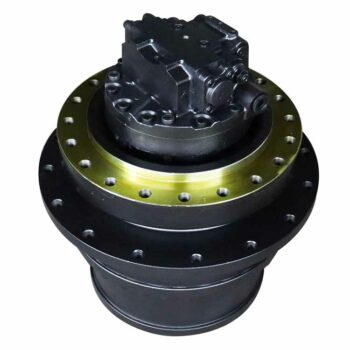
Factors to Consider When Selecting a Planetary Gearbox
Choosing the right planetary gearbox for a specific application involves considering various factors to ensure optimal performance and compatibility. Here are the key factors to keep in mind:
- Load Requirements: Determine the torque and speed requirements of your application. Planetary gearboxes offer different torque and speed ratios, so selecting the appropriate gearbox with the right load capacity is crucial.
- Ratio: Evaluate the gear reduction ratio needed to achieve the desired output speed and torque. Planetary gearboxes come in various gear ratios, allowing you to customize the output characteristics.
- Efficiency: Consider the gearbox’s efficiency, as it affects energy consumption and heat generation. Higher efficiency gearboxes minimize power losses during transmission.
- Size and Compactness: Planetary gearboxes are known for their compact size, but it’s essential to choose a size that fits within the available space while meeting performance requirements.
- Mounting Configuration: Determine how the gearbox will be mounted in your application. Planetary gearboxes can have different mounting options, including flange, shaft, or foot mountings.
- Input and Output Types: Select the appropriate input and output shaft configurations, such as male, female, keyed, splined, or hollow shafts, to ensure compatibility with your equipment.
- Environment: Consider the operating environment, including temperature, humidity, dust, and potential exposure to chemicals. Choose a gearbox with appropriate seals and materials to withstand the conditions.
- Accuracy: Some applications require precise motion control. If accuracy is essential, choose a gearbox with minimal backlash and high gear mesh quality.
- Service Life and Reliability: Evaluate the gearbox’s expected service life and reliability based on the manufacturer’s specifications. Choose a reputable manufacturer known for producing reliable products.
- Backlash: Backlash is the play between gears that can affect positioning accuracy. Depending on your application, you might need a gearbox with low backlash or a method to compensate for it.
- Budget: Consider your budget constraints while balancing performance requirements. Sometimes, investing in a higher-quality gearbox upfront can lead to long-term cost savings through reduced maintenance and downtime.
By carefully considering these factors and consulting with gearbox manufacturers or experts, you can select a planetary gearbox that best meets the unique demands of your application.
editor by CX 2023-10-20
China Custom Planetary Gearbox – 52mm (MGH-52 Series) gearbox design
Product Description
52mm IEC Standard Configuration
All machined gears for higher CZPT Torque
Operating Temperature: -17 Deg. C to 60 Deg. C
Max. Input Speed: 4000rpm
Axial load 10Kgs max.
Radial load 20Kgs max at 15mm away from shaft end
Rigid construction for long term industrial use.
Easy Installation
Packaging & Shipping
1, Waterproof plastic bag packed in foam box and carton as outer packing.
2, Export wooden box packaging for products.
Company Profile
- Originally motor division of CZPT HangZhou- China National Machinery & Equipment Imp & Exp HangZhou Co.,Ltd., 1 of TOP 20 stated owned Machinery Group
- Privately owned Ltd company since 2000: HangZhou CZPT Automation Technology Co. Ltd.
- Exmek Electric —Registered Brand Name
- Business: Design and manufacture of motion control products and components
- Highly qualified personnel
- UL, CE, RoHS certification
- ISO 9001, ISO 14000
Company Capabilities
- Modern Motor Design and Manufacture
- Part Set Design and Manufacture
- Magnetic Design Software-Motorsolver
- Molding
- Shipping world wide
Why CZPT Electric
- Open for general discussion and questions
- Time to market or theatre of operations can be substantially reduced
- Talented team of engineers providing innovative technical solutions
- One stop “supplier” and complete sub-system
- Quality products provided at competitive low cost
- Ability to ship world wide
- On time delivery
- Training at Customer locations
- Fast service on return and repair results
- Many repeated customers
Applications:
Use for swimming pool, automotive, semiconductor, chemical & medical, industrial automation, power tool, instrument, measuring equipment, office automation, various OEM application.
We are open for general discussion and questions. Contact us now!
| Application: | Universal, Industrial, Household Appliances |
|---|---|
| Operating Speed: | Adjust Speed |
| Excitation Mode: | Excited |
| Function: | Control |
| Casing Protection: | Closed Type |
| Number of Poles: | 2 |
| Samples: |
US$ 100/Piece
1 Piece(Min.Order) | |
|---|
| Customization: |
Available
| Customized Request |
|---|
Challenges in Achieving High Gear Ratios with Compactness in Planetary Gearboxes
Designing planetary gearboxes with high gear ratios while maintaining a compact form factor poses several challenges due to the intricate arrangement of gears and the need to balance various factors:
Space Constraints: Increasing the gear ratio typically requires adding more planetary stages, resulting in additional gears and components. However, limited available space can make it challenging to fit these additional components without compromising the compactness of the gearbox.
Efficiency: As the number of planetary stages increases to achieve higher gear ratios, there can be a trade-off in terms of efficiency. Additional gear meshings and friction losses can lead to decreased overall efficiency, impacting the gearbox’s performance.
Load Distribution: The distribution of loads across multiple stages becomes critical when designing high gear ratio planetary gearboxes. Proper load distribution ensures that each stage shares the load proportionally, preventing premature wear and ensuring reliable operation.
Bearing Arrangement: Accommodating multiple stages of planetary gears requires an effective bearing arrangement to support the rotating components. Improper bearing selection or arrangement can lead to increased friction, reduced efficiency, and potential failures.
Manufacturing Tolerances: Achieving high gear ratios demands tight manufacturing tolerances to ensure accurate gear tooth profiles and precise gear meshing. Any deviations can result in noise, vibration, and reduced performance.
Lubrication: Adequate lubrication becomes crucial in maintaining smooth operation and reducing friction as gear ratios increase. However, proper lubrication distribution across multiple stages can be challenging, impacting efficiency and longevity.
Noise and Vibration: The complexity of high gear ratio planetary gearboxes can lead to increased noise and vibration levels due to the higher number of gear meshing interactions. Managing noise and vibration becomes essential for ensuring acceptable performance and user comfort.
To address these challenges, engineers employ advanced design techniques, high-precision manufacturing processes, specialized materials, innovative bearing arrangements, and optimized lubrication strategies. Achieving the right balance between high gear ratios and compactness involves careful consideration of these factors to ensure the gearbox’s reliability, efficiency, and performance.
Advantages of Backlash Reduction Mechanisms in Planetary Gearboxes
Backlash reduction mechanisms in planetary gearboxes offer several advantages that contribute to improved performance and precision:
Improved Positioning Accuracy: Backlash, or the play between gear teeth, can lead to positioning errors in applications where precise movement is crucial. Reduction mechanisms help minimize or eliminate this play, resulting in more accurate positioning.
Better Reversal Characteristics: Backlash can cause a delay in reversing the direction of motion. With reduction mechanisms, the reversal is smoother and more immediate, making them suitable for applications requiring quick changes in direction.
Enhanced Efficiency: Backlash can lead to energy losses and reduced efficiency due to the impacts between gear teeth. Reduction mechanisms minimize these impacts, improving overall power transmission efficiency.
Reduced Noise and Vibration: Backlash can contribute to noise and vibration in gearboxes, affecting both the equipment and the surrounding environment. By reducing backlash, the noise and vibration levels are significantly decreased.
Better Wear Protection: Backlash can accelerate wear on gear teeth, leading to premature gearbox failure. Reduction mechanisms help distribute the load more evenly across the teeth, extending the lifespan of the gearbox.
Enhanced System Stability: In applications where stability is crucial, such as robotics and automation, backlash reduction mechanisms contribute to smoother operation and reduced oscillations.
Compatibility with Precision Applications: Industries such as aerospace, medical equipment, and optics require high precision. Backlash reduction mechanisms make planetary gearboxes suitable for these applications by ensuring accurate and reliable motion.
Increased Control and Performance: In applications where control is critical, such as CNC machines and robotics, reduction mechanisms provide better control over the motion and enable finer adjustments.
Minimized Error Accumulation: In systems with multiple gear stages, backlash can accumulate, leading to larger positioning errors. Reduction mechanisms help minimize this error accumulation, maintaining accuracy throughout the system.
Overall, incorporating backlash reduction mechanisms in planetary gearboxes leads to improved accuracy, efficiency, reliability, and performance, making them essential components in precision-driven industries.
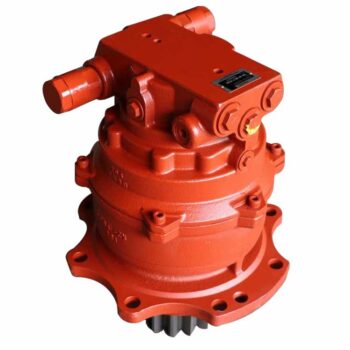
Role of Sun, Planet, and Ring Gears in Planetary Gearboxes
The arrangement of sun, planet, and ring gears is a fundamental aspect of planetary gearboxes and significantly contributes to their performance. Each gear type plays a specific role in the gearbox’s operation:
- Sun Gear: The sun gear is located at the center and is driven by the input power source. It transmits torque to the planet gears, causing them to orbit around it. The sun gear’s size and rotation speed affect the overall gear ratio of the system.
- Planet Gears: Planet gears are smaller gears that surround the sun gear. They are held in place by the planet carrier and mesh with both the sun gear and the internal teeth of the ring gear. As the sun gear rotates, the planet gears revolve around it, engaging with both the sun and ring gears simultaneously. This arrangement multiplies torque and changes the direction of rotation.
- Ring Gear (Annulus Gear): The ring gear is the outermost gear with internal teeth that mesh with the planet gears’ external teeth. It remains stationary or acts as the output shaft. The interaction between the planet gears and the ring gear causes the planet gears to rotate on their own axes as they orbit the sun gear.
The arrangement of these gears allows for various gear reduction ratios and torque multiplication effects, making planetary gearboxes versatile and efficient for a wide range of applications. The combination of multiple gear engagements and interactions distributes the load across multiple gear teeth, resulting in higher torque capacity, smoother operation, and lower stress on individual gear teeth.
Planetary gearboxes offer advantages such as compact size, high torque density, and the ability to achieve multiple gear reduction stages within a single unit. The arrangement of the sun, planet, and ring gears is essential for achieving these benefits while maintaining efficiency and reliability in various mechanical systems.
editor by CX 2023-10-19
China Custom ZD 3-200K Reduction Ratio Helical Precision Planetary Gearbox for AGV, CNC Machine, Robot with Best Sales
Product Description
Model Selection
Planetar y gearbox is a kind of reducer with wide versatility. The inner gear adopts low carbon alloy steel carburizing quenching and grinding or nitriding process. Planetary gearbox has the characteristics of small structure size, large output torque, high speed ratio, high efficiency, safe and reliable performance, etc. The inner gear of the planetary gearbox can be divided into spur gear and helical gear.
• Model Selection
Our professional sales representive and technical team will choose the right model and transmission solutions for your usage depend on your specific parameters.
• Drawing Request
If you need more product parameters, catalogues, CAD or 3D drawings, please contact us.
• On Your Need
We can modify standard products or customize them to meet your specific needs.
Range Of Planetary Gearbox
Other Products
Company Profile
| Application: | Motor, Machinery, Marine, Agricultural Machinery |
|---|---|
| Function: | Change Drive Torque, Speed Changing, Speed Reduction |
| Hardness: | Hardened Tooth Surface |
| Installation: | Vertical Type |
| Type: | Planetary Gear Box |
| Reduction Ratio: | 3-200K |
| Samples: |
US$ 100/Piece
1 Piece(Min.Order) | |
|---|
| Customization: |
Available
| Customized Request |
|---|
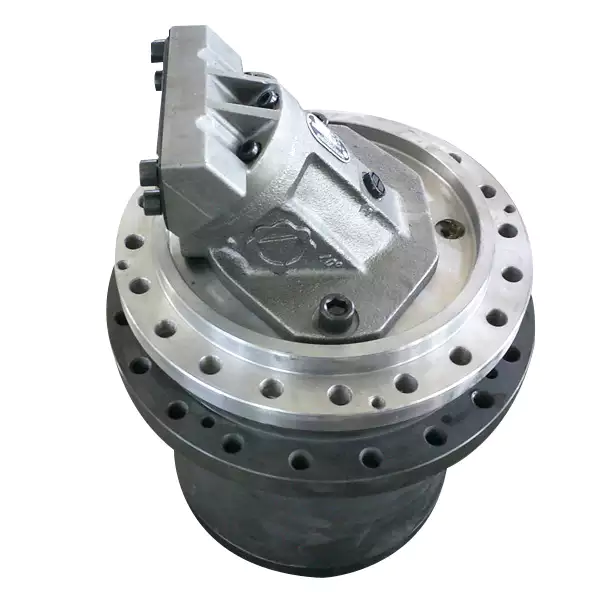
Concept of Coaxial and Parallel Shaft Arrangements in Planetary Gearboxes
Coaxial and parallel shaft arrangements refer to the orientation of the input and output shafts in a planetary gearbox:
- Coaxial Shaft Arrangement: In this arrangement, the input and output shafts are aligned along the same axis, with one shaft passing through the center of the other. This design results in a compact and space-efficient gearbox, making it suitable for applications with limited space. Coaxial planetary gearboxes are commonly used in scenarios where the gearbox needs to be integrated into a compact housing or enclosure.
- Parallel Shaft Arrangement: In a parallel shaft arrangement, the input and output shafts are positioned parallel to each other but not on the same axis. Instead, they are offset from each other. This configuration allows for greater flexibility in designing the layout of the gearbox and the surrounding machinery. Parallel shaft planetary gearboxes are often used in applications where the spatial arrangement requires the input and output shafts to be positioned in different locations.
The choice between a coaxial and parallel shaft arrangement depends on factors such as available space, mechanical requirements, and the desired layout of the overall system. Coaxial arrangements are advantageous when space is limited, while parallel arrangements offer more design flexibility for accommodating various spatial constraints.
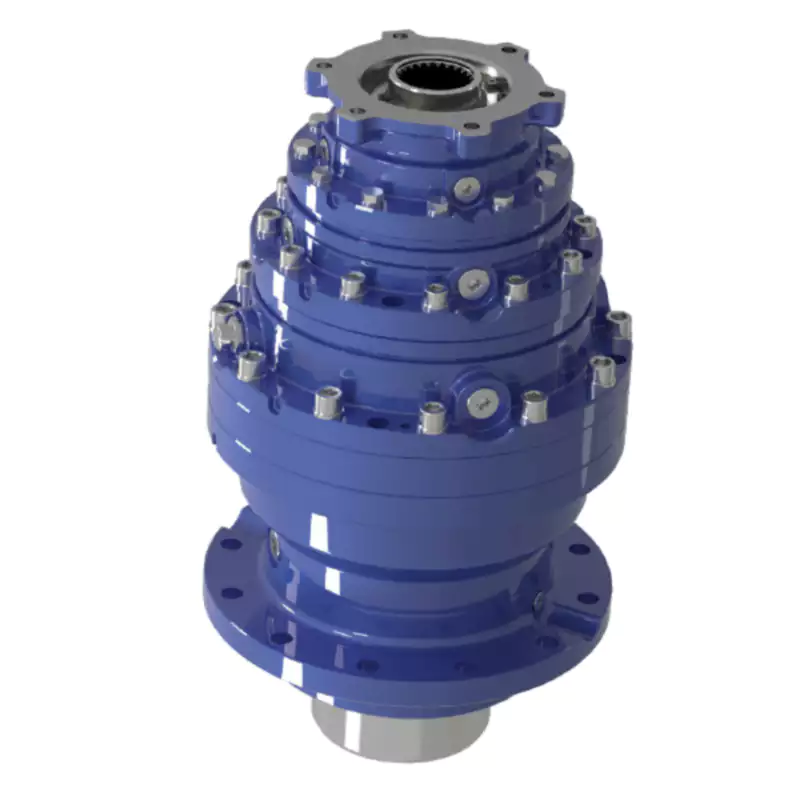
The Role of Lubrication and Cooling in Maintaining Planetary Gearbox Performance
Lubrication and cooling are essential factors in ensuring the optimal performance and longevity of planetary gearboxes. Here’s how they play a crucial role:
Lubrication: Proper lubrication is vital for reducing friction and wear between gear teeth and other moving components within the gearbox. It forms a protective layer that prevents metal-to-metal contact and minimizes heat generation. The lubricant also helps dissipate heat and contaminants, ensuring a smoother and quieter operation.
Using the right type of lubricant and maintaining the proper lubrication level are essential. Over time, lubricants may degrade due to factors like temperature, load, and operating conditions. Regular lubricant analysis and replacement help maintain optimal gearbox performance.
Cooling: Planetary gearboxes can generate significant heat during operation due to friction and power transmission. Excessive heat can lead to lubricant breakdown, reduced efficiency, and premature wear. Cooling mechanisms, such as cooling fans, fins, or external cooling systems, help dissipate heat and maintain a stable operating temperature.
Efficient cooling prevents overheating and ensures consistent lubricant properties, extending the life of the gearbox components. It’s particularly important in applications with high-speed or high-torque requirements.
Overall, proper lubrication and cooling practices are essential to prevent excessive wear, maintain efficient power transmission, and prolong the service life of planetary gearboxes. Regular maintenance and monitoring of lubrication quality and cooling effectiveness are key to ensuring the continued performance of these gearboxes.
Role of Sun, Planet, and Ring Gears in Planetary Gearboxes
The arrangement of sun, planet, and ring gears is a fundamental aspect of planetary gearboxes and significantly contributes to their performance. Each gear type plays a specific role in the gearbox’s operation:
- Sun Gear: The sun gear is located at the center and is driven by the input power source. It transmits torque to the planet gears, causing them to orbit around it. The sun gear’s size and rotation speed affect the overall gear ratio of the system.
- Planet Gears: Planet gears are smaller gears that surround the sun gear. They are held in place by the planet carrier and mesh with both the sun gear and the internal teeth of the ring gear. As the sun gear rotates, the planet gears revolve around it, engaging with both the sun and ring gears simultaneously. This arrangement multiplies torque and changes the direction of rotation.
- Ring Gear (Annulus Gear): The ring gear is the outermost gear with internal teeth that mesh with the planet gears’ external teeth. It remains stationary or acts as the output shaft. The interaction between the planet gears and the ring gear causes the planet gears to rotate on their own axes as they orbit the sun gear.
The arrangement of these gears allows for various gear reduction ratios and torque multiplication effects, making planetary gearboxes versatile and efficient for a wide range of applications. The combination of multiple gear engagements and interactions distributes the load across multiple gear teeth, resulting in higher torque capacity, smoother operation, and lower stress on individual gear teeth.
Planetary gearboxes offer advantages such as compact size, high torque density, and the ability to achieve multiple gear reduction stages within a single unit. The arrangement of the sun, planet, and ring gears is essential for achieving these benefits while maintaining efficiency and reliability in various mechanical systems.
editor by CX 2023-10-11